
Padda (Java Sparrow): Professional Breeding & Aviculture Guide
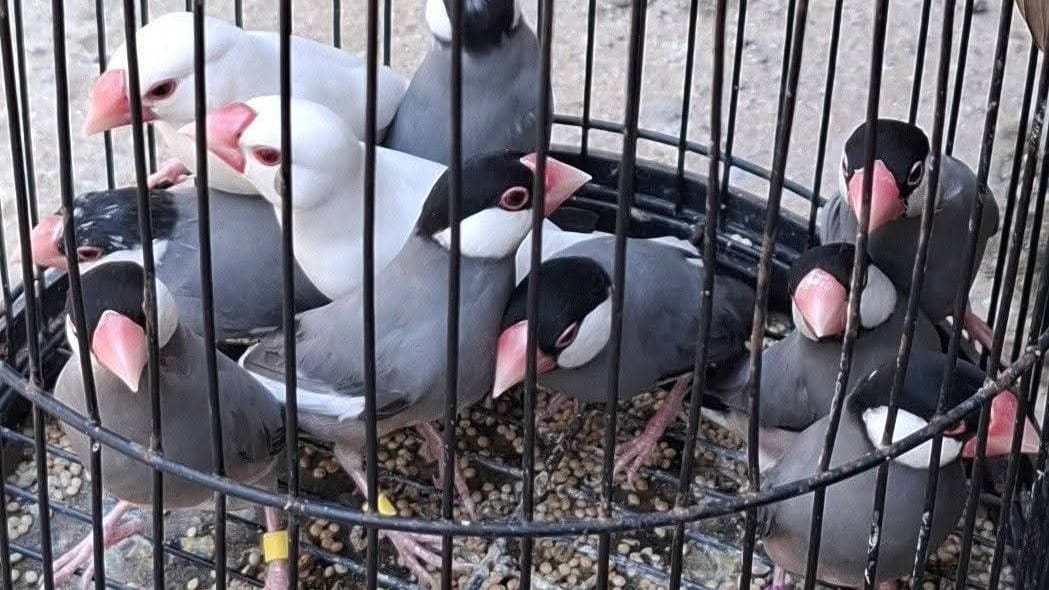
The padda, commonly known as the Java sparrow, stands as one of aviculture’s most distinctive and rewarding estrildid finches. Originally native to Java, Bali, and surrounding Indonesian islands, this robust species has become a global avicultural favorite, prized for its striking appearance, bold personality, and impressive array of color mutations. Despite being classified as vulnerable in the wild due to habitat loss and trapping pressures, the padda thrives in captivity with established populations worldwide. Their larger size compared to typical finches, combined with intelligence and breeding reliability, makes them excellent subjects for both serious breeders and mutation developers. This comprehensive guide provides advanced husbandry techniques essential for maintaining productive breeding colonies and developing quality exhibition stock.
Quick Facts
Scientific Name: Padda oryzivora (formerly Lonchura oryzivora)
Common Names: Padda, Java Sparrow, Java Finch, Rice Bird
Size: 15–17 cm (5.9–6.7 inches)
Weight: 24–30 grams
Lifespan: 7–10 years average; 12–15 years with exceptional care
Sexual Maturity: 6–9 months (optimal breeding at 10–12 months)
Clutch Size: 4–7 eggs (typically 5–6)
Incubation Period: 13–14 days
Banding Timing: Day 7–9 with 3.5mm or 4.0mm closed bands
Fledging Age: 24–28 days
CITES Status: Not listed; captive-bred readily available
Temperament: Bold, intelligent, can be territorial when breeding
Sexual Dimorphism
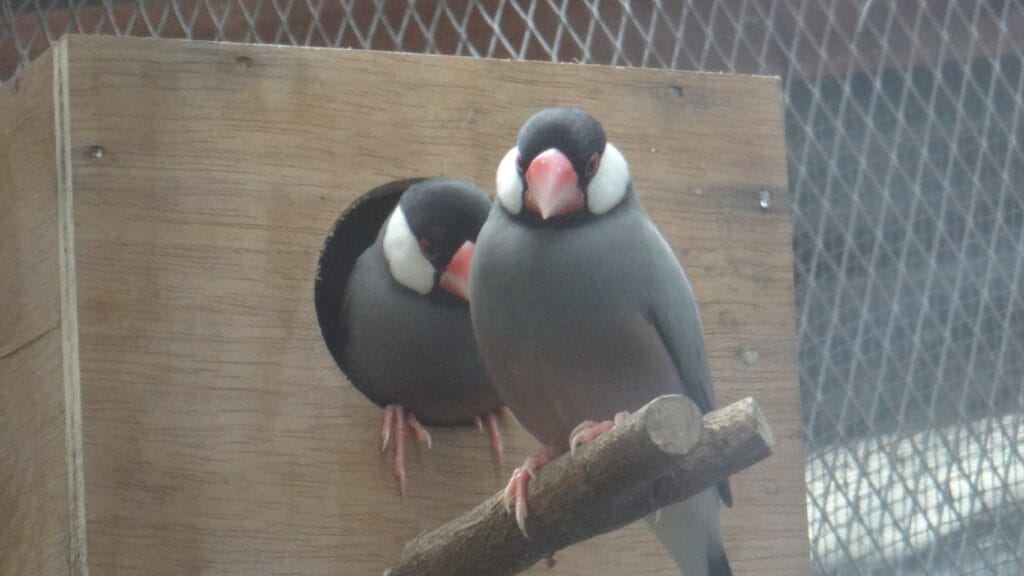
Padda exhibit subtle but recognizable sexual dimorphism once fully mature. Males display more prominent eye-rings with thicker, more vibrant pink orbital skin creating a bolder facial appearance. The bill appears marginally more massive with deeper pink-red coloration. Males typically show slightly larger head size and more robust body structure.
Females present with thinner, less pronounced eye-rings and slightly smaller, more delicate bills with softer pink tones. Overall body size averages marginally smaller, though overlap with smaller males occurs.
Behavioral sexing provides the most reliable identification: males perform distinctive courtship displays—bowing repeatedly while singing elaborate melodious songs lasting several seconds. The song is notably louder and more complex than typical finch vocalizations. Females may produce soft contact calls but never perform the full courtship song and bow display.
Juvenile padda show dull grayish-brown plumage with dark bills, completely different from adults. They undergo dramatic transformation during first molt at 10–14 weeks, developing adult plumage and characteristic pink bills.
Diet in Wild Habitat & Captive Nutrition
Natural Feeding Ecology
In their native Indonesian range, padda historically inhabited rice paddies, grasslands, and agricultural areas—hence the “rice bird” common name. They feed primarily on rice (both cultivated and wild varieties), grass seeds, and grain crops, with occasional insects and fruit. This agricultural association led to persecution as crop pests, contributing to wild population declines.
Optimized Captive Diet
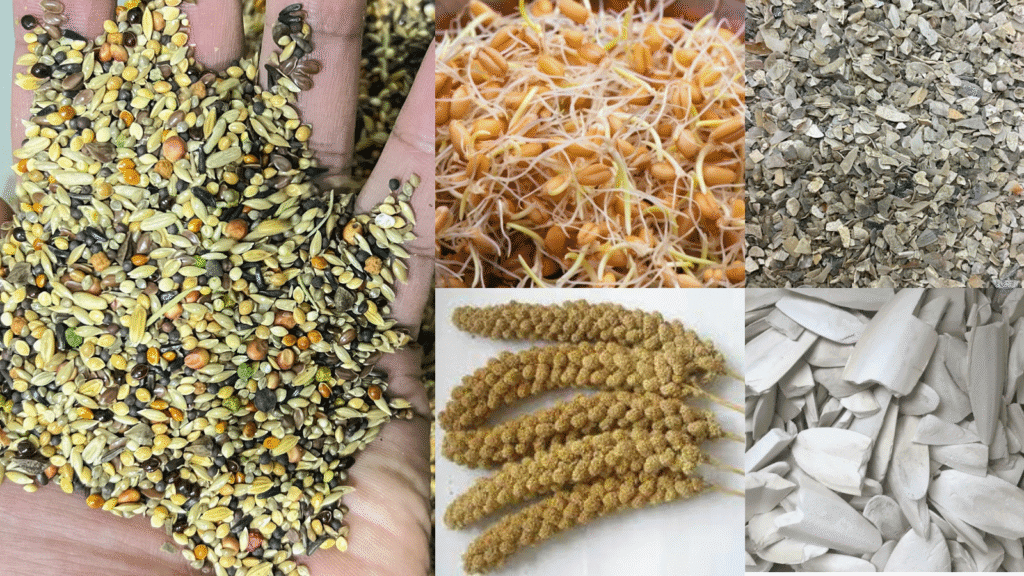
Base seed mix: Larger finch blend or small parrot mix containing white millet, canary seed, oats, paddy rice (unhulled rice), Japanese millet, and small amounts of hemp, niger, and sunflower hearts. Padda have stronger bills capable of hulling larger seeds than typical finches.
Supplementation protocol: Sprouted seeds 3–4 times weekly enhance breeding condition. Cooked brown rice occasionally appreciated. Egg food daily during breeding and molting. Fresh greens including romaine, kale, chickweed, and seeding grasses rotated regularly. Fresh fruits in moderation (apple, pear, berries). Cuttlebone, crushed oyster shell, and mineral grit constantly available. Fresh water daily; padda enjoy bathing.
Feeding behavior note: Padda are enthusiastic eaters and can become overweight in captivity. Monitor body condition and adjust portions accordingly, especially for non-breeding birds.
Housing & Aviary Setup
Padda require more substantial housing than smaller finches due to their larger size and active nature.
Space Requirements
Breeding pair: Minimum 120cm L × 60cm W × 60cm H; 150cm+ strongly preferred
Small colony (2–3 pairs): 2.5m L × 1.5m W × 2m H minimum
Flight aviary: 4m+ length ideal for multiple pairs or mixed collections
Housing Specifications
Construction: Require stronger wire mesh (19-gauge or heavier, 12mm spacing) due to powerful bills that can damage lightweight materials. Secure all fixtures; padda are intelligent and may manipulate weak fasteners.
Perching: Substantial natural branches (12–18mm diameter) positioned to maximize horizontal flight. Padda appreciate varied perch textures and diameters.
Environmental enrichment: Unlike typical finches, padda benefit from puzzle feeders, foraging opportunities, and environmental complexity. Provide shrubs, grasses, and varied landscapes.
Climate tolerance: Hardy once acclimated, tolerating 5–32°C (41–90°F). Provide frost-free shelter for breeding. Native to tropical regions; prefer warmer conditions (18–26°C / 64–79°F).
Photoperiod: 12–14 hours supports breeding cycles.
Compatibility considerations: Padda can be aggressive toward smaller finches, especially during breeding. Best housed with similar-sized robust species or alone. Monitor carefully in mixed aviaries.
Nestbox & Breeding Management
Nest Structure Preferences
Padda accept various enclosed structures: wooden nestboxes (15cm L × 15cm W × 18cm H with 6cm entrance), large wicker baskets, or breeding boxes with removable inspection panels. Position 1.5–2m high in sheltered locations.
Nesting Materials
Provide long grasses (20–30cm), coconut fiber, hay, and soft twine. Padda build substantial cup-shaped nests, less elaborate than typical estrildid dome nests but still requiring ample material.
Breeding Protocol
Pre-breeding conditioning: 8–10 weeks enriched nutrition with increased protein and sprouted seeds. Padda require longer conditioning than smaller finches.
Courtship: Males perform animated displays with singing and bowing. Bonded pairs are strongly monogamous and may remain paired for life.
Incubation: Both parents share duties. Males often incubate during daylight hours, females at night. Tolerate brief nest inspections better than many finch species.
Chick development: Hatch with sparse down. Days 7–9 optimal for banding (3.5mm for smaller mutations, 4.0mm for normal-sized birds). Fledge at 24–28 days but require parental feeding for additional 2–3 weeks.
Clutch management: Limit to 2–3 clutches annually with enforced 8–10 week rest periods to maintain pair health and vigor.
Aviculture & Conservation Notes
Padda have been maintained in captivity for centuries, particularly in Asia where they’re popular cage birds. Despite thriving in aviculture, wild populations are classified as Vulnerable due to habitat destruction and trapping. Captive breeding helps reduce pressure on wild stocks.
Conservation role: Well-managed captive populations serve as genetic reservoirs. Some breeding programs maintain pure Indonesian lineage birds separately from mutation lines.
Geographic variations: Captive padda likely represent multiple island populations, though specific origin documentation is rare. Focus on vigor and type rather than attempting origin reconstruction.
Major Mutation Categories
Padda mutation development has produced spectacular variety unmatched by most estrildids:
Established mutations:
- Fawn: Dilute version replacing gray with buff-brown tones
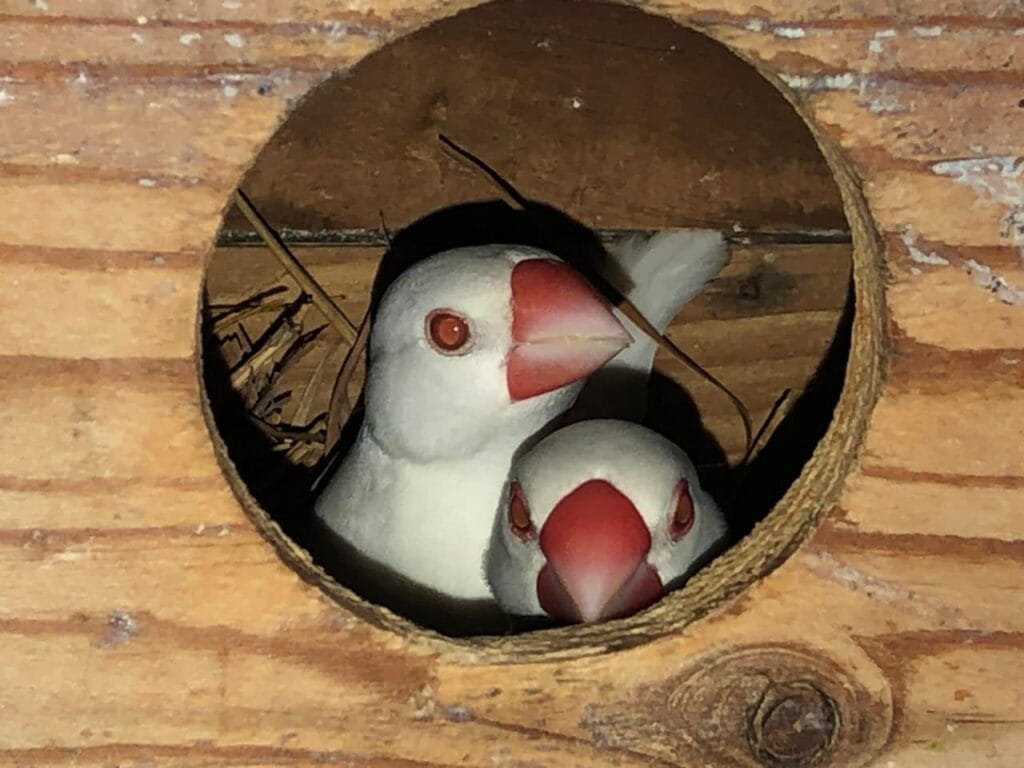
- White: Pure white plumage retaining pink bills and eye-rings
- Pied: White patches in variable patterns on normal or fawn base
- Cream: Further dilution of fawn mutation
- Silver: Gray dilution creating silver-gray appearance
- Agate: Reduction of melanin creating lighter gray
- Pastel: Soft dilution affecting all pigments
- Opal: Blue-gray mutation with unique iridescence
Complex combinations: Breeders create striking varieties combining multiple mutations (e.g., Fawn Pied, Cream Opal). Maintain detailed genetic records for mutation projects spanning multiple years.
Exhibition standards: Various organizations establish type standards for mutations. Show-quality birds require excellent conformation, proper size, and mutation-specific color clarity.

Health, Parasite Control & Common Issues
Preventive protocols: 30-day quarantine for new birds. Fenbendazole treatment every 3–4 months. Monitor for air sac mites causing respiratory symptoms. Maintain dry conditions preventing coccidiosis.
Common health challenges:
Obesity: Most common issue in pet padda. Monitor body condition; reduce seed portions if overweight. Encourage flight exercise.
Respiratory infections: From poor ventilation or temperature fluctuations. Symptoms include labored breathing, clicking, or nasal discharge requiring veterinary care.
Egg binding: Calcium-deficient or overweight hens most susceptible. Ensure mineral supplementation and ideal body condition before breeding.
Beak/nail overgrowth: Provide cuttlebone, mineral blocks, and varied perch textures. Trim carefully if necessary; padda have powerful bills requiring experienced handling.
Feather plucking: Stress, boredom, or nutritional issues. Provide environmental enrichment and ensure varied diet.
Breeder’s Tips & Checklist
✓ Pair compatibility: Allow natural pair formation; forced pairs show reduced success
✓ Genetic planning: Maintain detailed mutation inheritance records for multi-year projects
✓ Weight management: Monitor body condition; adjust feeding to prevent obesity
✓ Bill strength awareness: Use secure fasteners; padda can manipulate weak clips
✓ Band size selection: 3.5mm for smaller mutations, 4.0mm for robust normal birds
✓ Exhibition preparation: Condition show birds separately 10–12 weeks pre-show
✓ Mutation documentation: Photograph and record all offspring for tracking inheritance
✓ Environmental complexity: Provide enrichment beyond typical finch requirements
✓ Aggression monitoring: Watch for territorial behavior; separate problem individuals
✓ Long-term pairing: Respect established bonds; avoid unnecessary pair separation
✓ Rest enforcement: Separate pairs after breeding season to prevent over-production
Frequently Asked Questions
Q: Can padda be housed with smaller finches like zebras or Gouldians?
A: Not recommended. Padda can be aggressive toward smaller species, especially during breeding. Their larger size and territorial nature create risks. House with similar-sized robust finches or maintain separate colonies.
Q: How do I prevent my padda from becoming overweight?
A: Monitor body condition weekly by gently palpating breast muscle. Reduce seed portions if excessive fat accumulates over keel bone. Increase flight space and provide environmental enrichment encouraging activity. Avoid high-fat treats.
Q: What’s the best approach for developing new color mutations?
A: Start with proven genetic understanding. Selectively breed birds showing desired traits over 5–8 generations minimum. Maintain detailed records documenting all pairings and outcomes. Outcross periodically to maintain vigor. Expect 4–6 years to establish breeding-true mutations. Consult established padda genetics resources before beginning projects.
Q: Why are padda classified as vulnerable if they breed so well in captivity?
A: Wild populations face severe pressures from habitat destruction (wetland drainage, agricultural conversion) and trapping for pet trade. Despite breeding readily in captivity, wild birds occupy increasingly fragmented habitat. Captive breeding reduces trapping pressure but cannot replace wild habitat conservation. Responsible breeders support conservation by reducing demand for wild-caught birds.