
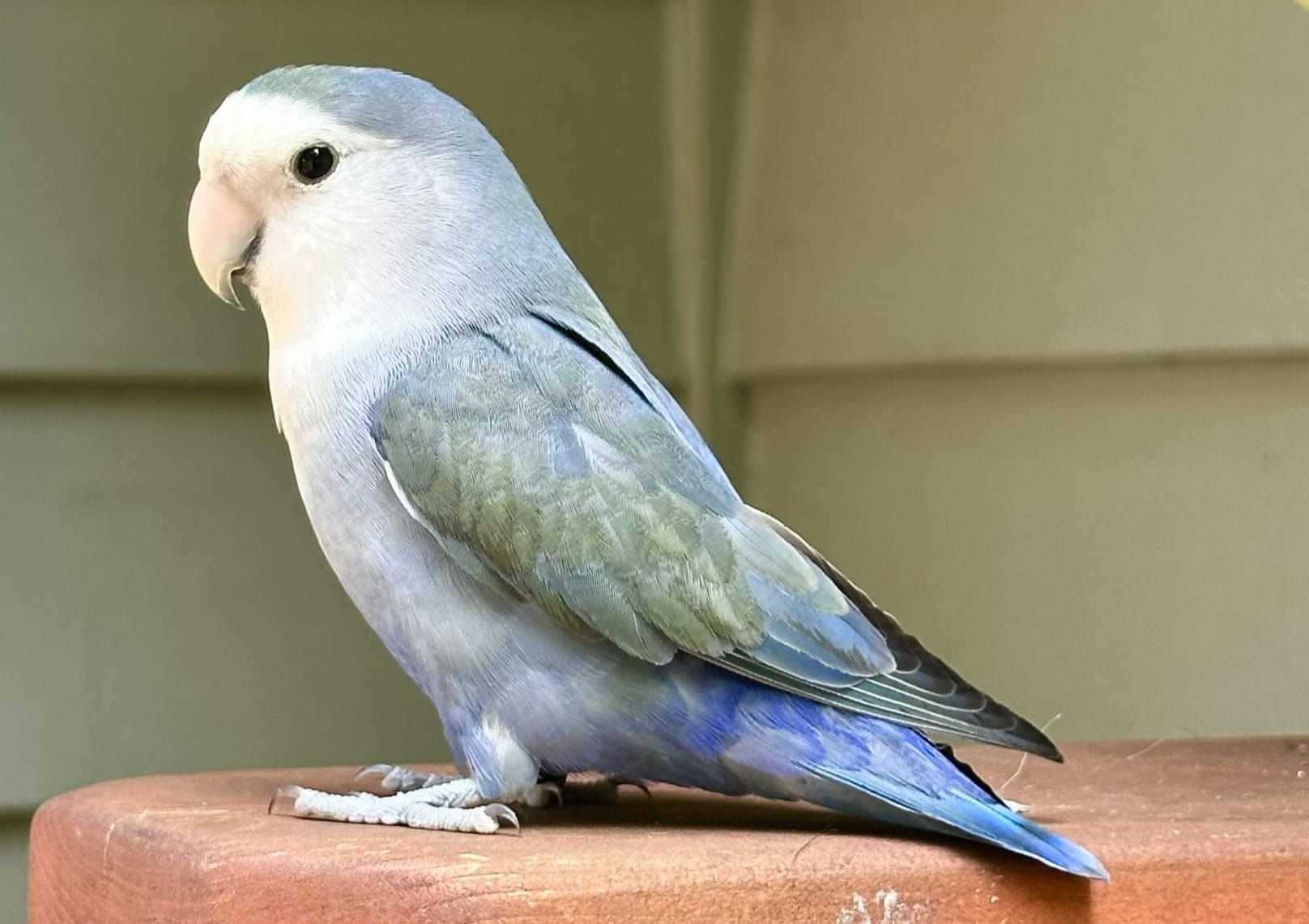
Lovebirds: The Aviculturist’s Ultimate Guide to Care and Successful Breeding
Lovebirds (genus Agapornis) are popular members of the parakeet or parrot family, prized globally by hobbyists for their vibrant colors, charming personalities, and manageable size. Originating from the tropical parts of Africa and the island of Madagascar, the nine species of lovebirds are stocky, short-bodied birds with curved, hook-shaped beaks.
Lovebirds are favored by both novice and experienced bird enthusiasts because many species, particularly the Peach-faced, Fischer’s, and Masked, are considered “easy to breed” and are readily available in the pet trade. A healthy lovebird can live for over 12 years with proper care.
Table of Contents
Quick Facts: Lovebird Breeding Data (Peach-faced/Common Species)
| Characteristic | Data (Based on Available Sources) |
| Scientific Name | Agapornis (genus) |
| Common Names | Lovebird, Rosy-faced (Peach-faced) |
| Size (Length) | 4.5 to 7 inches (approx. 11.4 to 17.8 cm) |
| Weight | Approx. 50 to 60 grams (Peach-faced) |
| Lifespan | 12 to 25 years |
| Sexual Maturity | Not before 1 year of age (breeders often wait until the second year) |
| Clutch Size | Typically 4 to 5 eggs, but can range from under 5 to over 10 |
| Incubation Period | 21 to 25 days (depending on weather) |
| Banding (Closed Ring) | When under two weeks old |
| Fledging Age | Venture out of the nest around 5 to 6 weeks, fully independent around 6 to 8 weeks |
| Temperament | Feisty, fearless, territorial, can be aggressive or nippy if not handled |
Sexual Dimorphism: Identifying Your Pairs
For breeding success, identifying the sex of your lovebirds is crucial.
- Dimorphic Species: In a few species, such as the Madagascar, Red-faced, and Abyssinian lovebirds, males and females have visible differences in plumage. For example, the male Madagascar has a grayish-lavender head, while the female has a pale green head.
- Monomorphic Species: The most popular species (Peach-faced, Fischer’s, and Masked) are monomorphic, meaning the sexes look alike. Identifying a pair requires careful observation or technical testing.
- Behavioral Differences:
- Females are generally larger, heavier, and tend to be feistier or quicker to start squabbles.
- Female Peach-faced lovebirds will tear nesting material (like paper strips) and tuck it into the feathers of their rump to transport it to the nest; males do not tuck.
- Males often regurgitate food to the female as a sign of affection.
- Sure-fire Sexing: For guaranteed results, a vet can perform a surgical sexing with a scope, or you can use DNA sexing from a blood sample or feather.
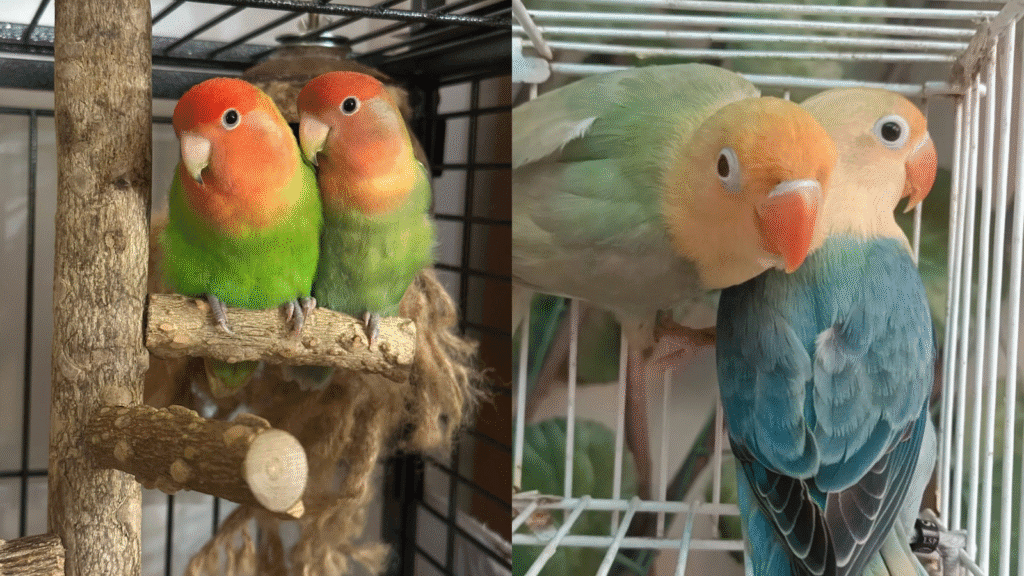
Nutrition: Fueling a Healthy Flock
A lovebird’s diet must be varied; an all-seed diet is deadly, leading to illness and a shortened lifespan.
- Wild Diet: In their native habitat, lovebirds eat grains, seeds, fruits, buds, and seeding grasses.
- Captive Diet & Supplements:
- Base Diet: A commercial seed mix appropriate for cockatiels can be the base. Pellets can be a highly nutritious addition.
- Fresh Foods: Approximately one-third of the diet should consist of fresh fruits and vegetables. Prioritize dark green and orange produce, as they are rich in Vitamin A (important for respiratory health).
- Protein: Important sources include fish, hard-boiled eggs, and peanut butter.
- Table Foods: Lovebirds can eat almost anything humans eat, except for chocolate, avocado, alcohol, and raw onion.
- Calcium: Mineral blocks and cuttlebone are indispensable sources of calcium, particularly crucial for laying hens to prevent egg-binding and bone brittleness.
Housing & Aviary Setup: Space and Security
Housing must be secure and large enough to accommodate the lovebird’s high energy.
- Cage Size: Bigger is better. The minimum size should be at least 3 feet (36 inches) long, allowing the bird to fly from perch to perch. A cockatiel-sized cage is often a better starting point than a typical “lovebird-size” cage.
- Cage Design: Square or long rectangular cages are ideal. Wrought iron or uncoated steel is recommended, as plastic coatings can be toxic if ingested. The cage should have a bottom grate to prevent the bird from contacting soiled bedding, which is unsanitary and can lead to illness.
- Aviaries (Colony Breeding): Lovebirds are excellent colony birds, but should never be housed with other bird species, as they will attack them. Provide a minimum of two cubic feet of space per lovebird. The enclosure must be double-wired, with two layers of wire, to prevent predators like raccoons or rats from reaching and harming the birds.
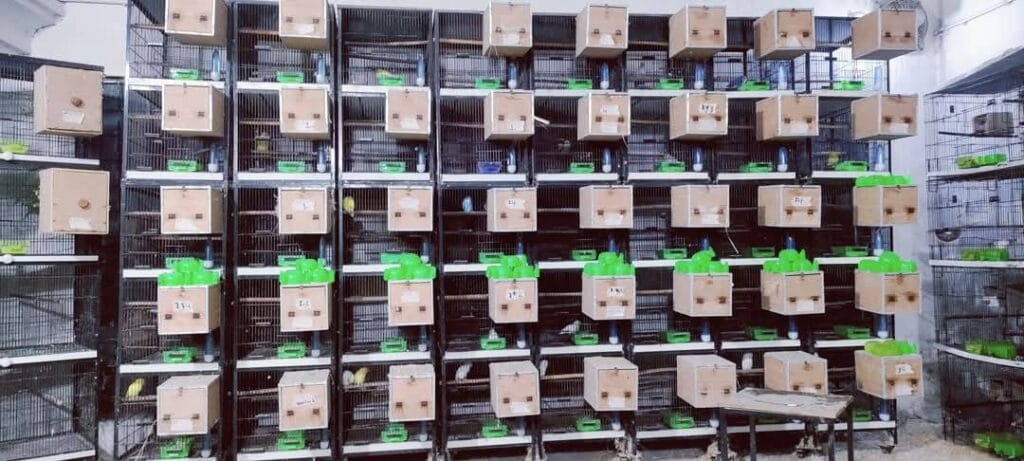
Nestbox & Breeding Management: Getting Started
Breeding lovebirds is a demanding hobby that requires time and planning, but can be very rewarding.
- Conditioning: Before setting up to breed, condition the pair for two to three months with a nutritious diet rich in calcium and Vitamin A, and ensure they have ample space for exercise.
- Nest Box:A wooden box, approximately 6 or 7 inches by 7 or 8 inches, by 8 to 10 inches tall (approx. 15-17 x 17-20 x 20-25 cm) , is suitable for Peach-faced lovebirds. Eye-ring species prefer a longer, skinnier box.
- Nesting Material: Provide material like white newsprint, clean cornhusks, and palm fronds. The bottom should be lined with pine shavings (not cedar).
- Timing: The ideal breeding season is spring, when fresh foods and longer days are available.
- Incubation: High humidity (around 65%) is vital; misting the nest box and eggs or providing a bath dish for the hen to wet her feathers helps ease hatching.
- Hand-feeding: For tamer pets, chicks can be removed from the nest around two weeks of age (when eyes open) and hand-fed.
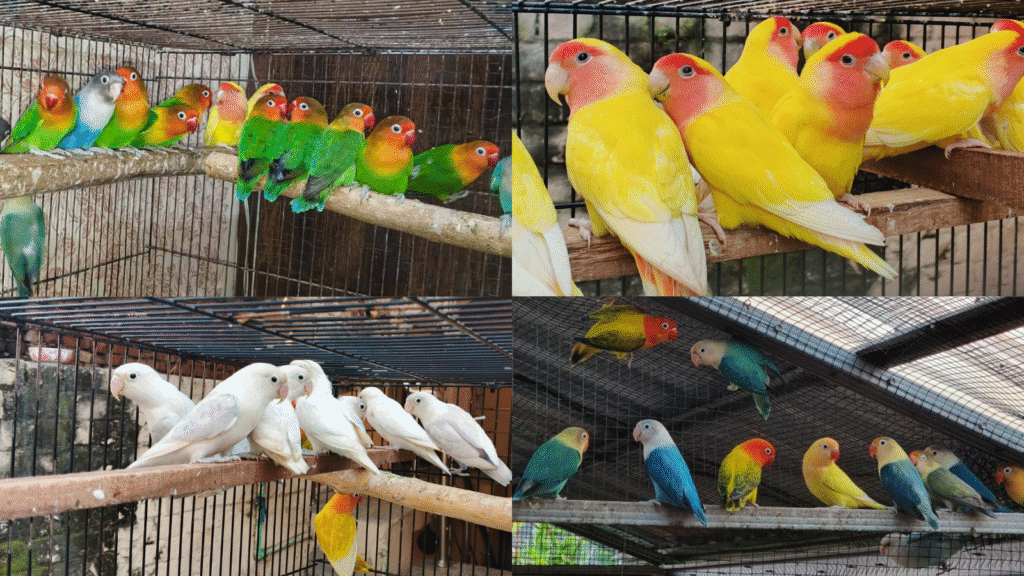
Aviculture & Conservation Notes: Mutations and Hybridization
The Peach-faced lovebird is the most commonly kept species, available in hundreds of color combinations thanks to captive-breeding.
- Mutations: A color mutation is a natural variation that breeders capitalize on to create new colors (e.g., lutino/yellow).
- Genetics: Green is the visually dominant color for Peach-faced lovebirds. Breeders must keep fastidious records to determine the genes carried by their birds.
- Hybridization: Mating lovebirds of different species is strongly discouraged by the bird community. This results in hybridization and often produces “mules” (unfertile babies) that are unfit to breed or show and tend to be aggressive.
Health, Parasite Control & Common Issues
A lovebird can hide illness, so owners must be observant.
- Signs of Illness: Symptoms include sleeping excessively (especially on the cage floor), being constantly fluffed up, loss of appetite, discharge from eyes/nares, and changes in droppings.
- Veterinary Care: Always find an avian veterinarian who specializes in birds, as their physiology is different from cats or dogs. A well-bird checkup is recommended soon after purchase, and annually thereafter.
- Quarantine: Isolate a new bird for a period of 30 to 60 days from established birds to prevent the spread of undetected illnesses.
- Household Danger: Nonstick cookware, even on low heat, emits odorless, fatal fumes. Other major hazards include standing water (drowning risk), ceiling fans, and other household pets (a cat scratch is often deadly).
Breeder’s Tips & Checklist
- Breeding Rest: Rest your pair after three clutches to prevent exhaustion, egg-binding, and calcium deficiency.
- Hand-feeding Safety: Never force-feed or use food that is too hot (crop burn) or too cool (soured). Use an eyedropper for slow, safe feeding if inexperienced.
- Show Prep: If showing, train your bird to accept a judge’s “wand” (chopstick) and condition its feathers with a nutritious diet.
- Territoriality: Female lovebirds can be very territorial when breeding; remove nesting material like paper to discourage nesting behavior outside the designated box.
- Enrichment: Provide plenty of wood and rope toys to satisfy their strong chewing instinct and prevent boredom.
FAQ
- Do lovebirds need to be kept in pairs? No. A single lovebird will thrive if the owner acts as its companion and provides daily attention. If a single bird is ignored, it needs another lovebird for company.
- How long do lovebirds live? A well-cared-for lovebird can live for 12 to 25 years.
- Is wing clipping necessary for a pet lovebird? Wing clipping is recommended for novice owners, as fully flighted birds risk escaping through open doors/windows or suffering accidents like flying into mirrors, drowning, or being injured by ceiling fans. Clipping prevents the bird from flying far, making retrieval easier.
- Are lovebirds good pets for small children? No. Due to their tendency to be snappish and their sharp beaks, lovebirds are best suited for older children (over ten) or adults who understand the bird’s need for routine and respect its personal space.