
Long-Tailed Finch: Expert Breeding Guide & Conservation Aviculture
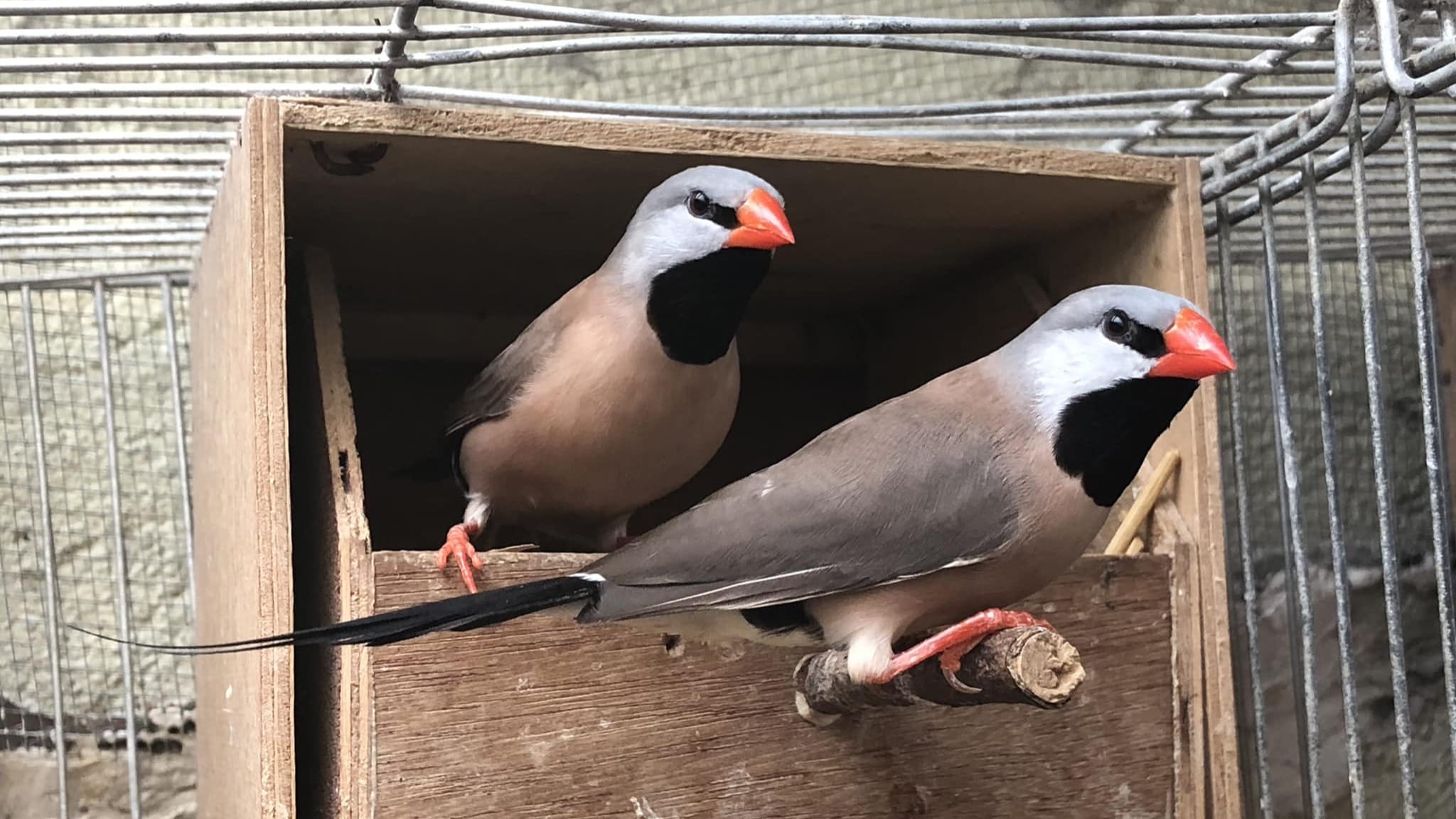
The long-tailed finch represents one of Australia’s most elegant and distinctive grassland finches, celebrated for its remarkable elongated tail feathers and gentle disposition. Split into two distinct subspecies—the yellow-billed form (Poephila acuticauda acuticauda) and the red-billed form (P. a. hecki)—this striking estrildid has long captivated aviculturists worldwide. While not currently facing the critical conservation challenges of its cousin the black-throated finch, the long-tailed finch remains an important species for responsible aviculture and grassland ecosystem awareness. This guide provides practical husbandry for maintaining healthy captive populations while honoring the ecological significance of this charismatic Australian species.
Table of Contents

Quick Facts Profile
Scientific Name: Poephila acuticauda (two subspecies)
Common Names: Long-tailed Finch, Blackheart Finch, Shaft-tail Finch
Subspecies: P. a. acuticauda (yellow-billed); P. a. hecki (red-billed)
Size: 15–17 cm (5.9–6.7 inches) including tail
Weight: 14–18 grams
Lifespan: 6–9 years in captivity (up to 12 years recorded)
Sexual Maturity: 9–12 months (breeding not recommended before 12 months)
Clutch Size: 4–6 eggs (occasionally 7–8)
Incubation Period: 13–14 days
Banding Schedule: Day 7–9 with 2.5mm closed bands
Fledging Age: 21–24 days (independent by 35–40 days)
CITES Status: Not listed; wild populations stable
Temperament: Peaceful, social, minimally territorial during breeding
Sexual Dimorphism Characteristics
Long-tailed finches display subtle sexual dimorphism that becomes more apparent with maturity and careful observation. Males typically exhibit more extensive and intensely colored black throat patches (the “blackheart”) extending further down the breast with crisp, well-defined edges. The bill color—whether yellow or red depending on subspecies—appears more vibrant and saturated. Males also display slightly longer central tail feathers, though this requires direct comparison to be reliable.
Females show smaller, less extensive throat patches with softer edges that blend more gradually into the pale fawn breast. Their overall plumage appears slightly softer in tone, with marginally less contrast between markings. The bill color tends toward paler shades, though this varies individually.
The yellow-billed subspecies (acuticauda) displays waxy yellow bills, while the red-billed form (hecki) shows coral-red to orange-red bills—the most reliable characteristic differentiating the two subspecies. Both forms share the distinctive elongated black central tail feathers that give the species its name.
Juvenile birds lack the black throat patch entirely, showing uniform pale beige-fawn underparts with pinkish bills that gradually develop adult coloration. The characteristic long tail feathers grow progressively during the first molt, beginning at 10–14 weeks.

Diet in Natural Environment & Captive Nutrition
Wild Feeding Ecology
In their native northern Australian savannas and grasslands, long-tailed finches feed primarily on native grass seeds (Sorghum, Heteropogon, Enneapogon, Themeda), showing particular preference for half-ripe and ripening seed heads. They forage both on ground and directly from standing grass stems. Like other Poephila species, they require regular access to water and are often found near watercourses, though they tolerate semi-arid conditions better than black-throated finches. Small invertebrates supplement the diet during breeding season.
Optimized Captive Diet
Foundation: Quality Australian finch blend containing white millet, red/yellow millet, panicum, Japanese millet, canary seed, and small amounts of hulled oats. Include niger and grass seeds for variety.
Supplements:
- Sprouted seeds 4–5 times weekly, especially during breeding and molting periods
- Seeding grasses (foxtail, panicgrass, millet sprays) provide essential natural foraging enrichment
- Live food during breeding: small mealworms, termites, waxmoths, and commercial egg food
- Green foods including chickweed, dandelion greens, spinach, and romaine lettuce offered 3–4 times weekly
- Cuttlebone, crushed oyster shell grit, and mineral block constantly available
- Fresh water changed daily with shallow bathing opportunities essential for plumage maintenance
Housing Requirements & Aviary Design
Long-tailed finches thrive in spacious aviaries that accommodate their active flight patterns and distinctive tail feathers.
Space Requirements
Breeding pair: 150cm L × 60cm W × 90cm H minimum; 180cm+ preferred to prevent tail damage
Small colony (4–6 birds): 2.5m L × 1m W × 1.5m H minimum
Display colony: 3m+ length optimal for multiple pairs and natural behaviors
Critical Housing Features
Flight space: Emphasize horizontal flight distance over height to accommodate long tail feathers. Avoid overcrowding which leads to tail damage.
Perching: Natural eucalyptus, acacia, or melaleuca branches (8–15mm diameter) positioned to allow ample clearance for tails. Vary heights and create flight paths between perches.
Shelter zones: Include dense brush areas and planted corners for security and roosting. Long-tailed finches appreciate visual barriers and retreat spaces.
Enrichment: Live or artificial native grasses and small shrubs (Callistemon, Melaleuca, Acacia) provide psychological security and natural behaviors. Avoid toxic plants including oleander, rhododendron, and avocado.
Climate: Hardy once acclimated; provide frost-free shelter maintaining minimum 10°C (50°F), though brief exposure to lower temperatures tolerated by healthy adults. Tolerates summer heat to 38°C (100°F) with adequate shade and ventilation.
Photoperiod: Maintain 12–14 hour photoperiod for optimal health; extend to 14–15 hours to stimulate breeding condition.
Compatibility: Generally peaceful with similar-sized Australian finches including Gouldian finches, star finches, and peaceful foreign species. Monitor for individual aggression, though significantly less territorial than many finch species.
Nestbox Selection & Breeding Management
Nest Structure Preferences
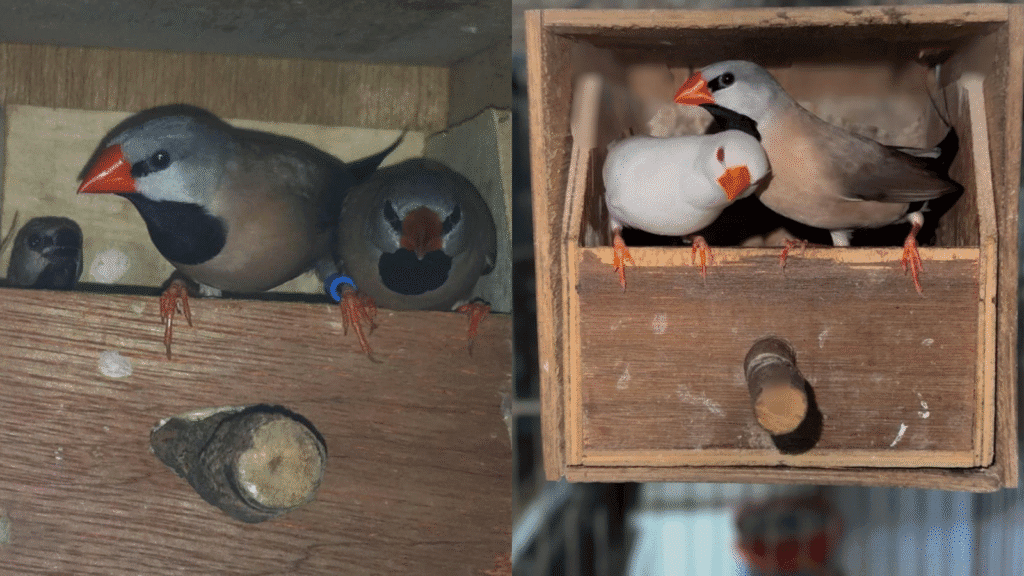
Long-tailed finches readily accept multiple nest types: wicker or bamboo enclosed nests (15cm diameter), wooden nestboxes (12–15cm³ with 5cm entrance hole), or will construct elaborate nests in dense brush or planted areas if provided.
Nesting materials: Long dried native grasses (20–30cm), coconut fiber, soft meadow hay, jute string, and feathers. Some pairs incorporate green grass sprigs and soft leaves.
Construction: Pairs collaborate to build substantial dome nests with well-defined entrance tunnels. Males typically bring materials while females arrange them, though roles overlap. Construction takes 7–14 days.
Breeding Protocol
Natural season: September–April in wild populations, though captive birds may breed year-round under optimal conditions and extended photoperiods.
Pre-breeding conditioning: 6–8 weeks of enriched nutrition, gradually increasing photoperiod (14+ hours), environmental stability, and introduction of live food before offering nestboxes. Provide multiple nestbox options allowing pairs to select preferred sites.
Courtship: Males perform charming displays including bill-wiping, grass-stem presentation, and soft singing while bobbing. Both sexes engage in mutual preening.
Egg laying: 4–6 eggs laid on consecutive days. Both parents share incubation duties relatively equally, sitting for 2–4 hour shifts.
Development timeline:
- Days 1–13: Incubation period with both parents sitting tightly
- Days 13–14: Chicks hatch with sparse gray down, eyes closed, pink skin visible
- Days 3–7: Rapid growth; down becomes denser
- Days 7–9: Optimal banding window with 2.5mm closed bands
- Days 9–12: Eyes begin opening; pin feathers emerge
- Days 12–18: Rapid feather development; chicks become active and vocal
- Days 21–24: Fledging occurs; chicks initially clumsy but improve quickly
- Days 25–40: Parents continue feeding fledglings; young birds gradually achieve independence

Post-fledging: Young birds often return to nest for roosting during first week. Parents may begin new clutch 10–14 days after fledging.
Management recommendations:
- Restrict pairs to 2–3 clutches annually, followed by 8–10 week rest period
- Remove nestboxes during rest periods to discourage continuous breeding
- Society finches or Bengalese finches can foster eggs if necessary, though species-reared chicks develop more natural behaviors
- Monitor for egg binding in young or calcium-deficient hens
- Maintain detailed breeding records including parentage, hatch dates, and band numbers
Aviculture, Conservation & Human Relationships
Conservation Status & Ecological Significance
The long-tailed finch maintains stable wild populations across northern Australia’s tropical savannas and grasslands, occupying a range from the Kimberley region of Western Australia eastward through the Northern Territory to northwestern Queensland. Unlike the critically endangered southern black-throated finch, long-tailed finches have adapted reasonably well to moderate habitat modification and are not currently threatened.
However, the species serves as an important indicator of grassland ecosystem health. Loss of native grass diversity, altered fire regimes, and grazing pressure can impact local populations. The long-tailed finch’s presence indicates functioning savanna ecosystems with adequate grass seed production and water availability.
Captive Breeding Programs
Subspecies management: Responsible breeders maintain separate programs for yellow-billed (acuticauda) and red-billed (hecki) subspecies to preserve genetic integrity. Cross-breeding between subspecies is discouraged to maintain pure bloodlines, particularly as red-billed birds are less common in aviculture.
Genetic documentation: Maintain detailed pedigree records including band numbers, parentage, hatch dates, and subspecies verification. This becomes increasingly important as captive populations age and founders are lost.
Avicultural availability: Long-tailed finches breed reliably in captivity and are reasonably available to responsible hobbyists. Their gentle temperament and striking appearance make them popular in mixed collections.
Relationship with Humans
Long-tailed finches adapt remarkably well to human presence in aviary settings, often becoming quite bold and confident with regular interaction. They display curiosity about their environment and will investigate new additions, though they remain less assertive than zebra finches.
Their graceful appearance, peaceful disposition, and entertaining behaviors make them excellent subjects for educational programs about Australian grassland ecosystems. Many keepers report forming strong observational bonds with their long-tailed finches, noting individual personalities and preferences.
The species’ relatively stable conservation status and breeding success make them suitable ambassadors for promoting awareness about Australia’s diverse finch fauna and the importance of habitat preservation for less secure species.
Health Management & Disease Control
Quarantine protocol: Isolate new birds 30–45 days in separate airspace with fecal examination and health assessment before introducing to established colonies.
Parasite control:
- Internal parasites: Fenbendazole or levamisole treatment every 3–4 months, increased during wet seasons
- Air sac mites: Monitor for respiratory clicking, labored breathing, or tail bobbing; treat promptly with ivermectin
- External parasites: Regular observation for feather mites or lice; treat with appropriate avicides and housing disinfection
- Coccidiosis: Prophylactic treatment during stress periods (breeding, molting, extreme weather)
Sanitation: Clean food and water containers daily. Perform weekly spot cleaning and monthly deep cleaning with avian-safe disinfectants. Maintain dry conditions as damp environments promote fungal and bacterial growth.
Common health issues:
Tail feather damage: Most common issue resulting from inadequate flight space or overcrowding. Damaged feathers regrow during next molt if housing is corrected.
Egg binding: Occurs in calcium-deficient, overweight, or first-time layers. Provide abundant calcium sources and limit breeding in young or compromised hens.
Heat stress: Despite Australian origins, birds acclimated to temperate climates can suffer heat stress above 38°C. Provide multiple shaded areas, misting opportunities, and ensure water availability.
Respiratory infections: Often result from poor ventilation, overcrowding, or exposure to cold drafts. Require veterinary diagnosis and antibiotic treatment. Prevention through proper housing is essential.
Overgrown claws/beaks: Provide natural perches of varying diameters, rough surfaces, and cuttlebone. Trim carefully if overgrowth occurs.
Obesity: Can develop in inactive birds with unlimited high-fat seeds. Ensure adequate flight space and limit high-fat seeds like niger and hemp.
Responsible Breeder’s Checklist
✓ Subspecies identification: Verify and document whether you maintain yellow-billed or red-billed forms
✓ Genetic documentation: Maintain detailed parentage, band numbers, and lineage records
✓ Adequate spacing: Provide sufficient aviary length to prevent tail damage
✓ Breeding coordination: Consider connecting with other breeders for genetic diversity, especially for red-billed subspecies
✓ Habitat simulation: Incorporate native grasses and natural perching to encourage species-appropriate behaviors
✓ No hybridization: Never cross-breed subspecies or with other Poephila species
✓ Nutritional optimization: Provide species-appropriate diet with emphasis on grass seeds and sprouted grains
✓ Health monitoring: Establish relationship with avian veterinarian; conduct regular health assessments
✓ Responsible placement: Screen buyers for appropriate knowledge and housing; provide care information
✓ Educational outreach: Share husbandry knowledge and promote awareness of Australian grassland conservation
Frequently Asked Questions
Q: Can I breed yellow-billed and red-billed long-tailed finches together?
A: While biologically possible, responsible breeders avoid crossing the two subspecies to maintain genetic integrity and pure bloodlines. Each subspecies represents distinct wild populations and should be maintained separately. Always document and verify which subspecies you’re working with.
Q: How can I tell if my birds are yellow-billed or red-billed subspecies?
A: Examine the adult bill color. Yellow-billed birds (P. a. acuticauda) display waxy yellow bills, while red-billed birds (P. a. hecki) show coral-red to orange-red bills. Juvenile birds have pinkish bills that gradually develop adult coloration by 4–6 months. The red-billed form is less common in aviculture.
Q: Are long-tailed finches suitable for beginner finch keepers?
A: Long-tailed finches are more suitable for beginners than black-throated finches but still benefit from some prior finch experience. They’re hardier and less demanding than Gouldian finches but require more specialized care than zebra or society finches. Their peaceful temperament and moderate breeding productivity make them good “next step” birds for advancing hobbyists.
Q: Why do my long-tailed finches have damaged tail feathers?
A: Tail damage typically results from inadequate flight space, overcrowding, or inappropriate cage dimensions. Long-tailed finches require horizontal space of at least 150cm for pairs to accommodate their elongated tail feathers. Damaged feathers will regrow during the next molt if housing is corrected.
Q: Can long-tailed finches be housed with other Australian finch species?
A: Yes, long-tailed finches are among the most peaceful Australian finches and mix well with Gouldian finches, star finches, other Poephila species, and many peaceful foreign finches. Avoid housing with aggressive species like cut-throat finches or highly territorial birds. Always monitor new introductions carefully.
Q: How do long-tailed finches differ from black-throated finches in care requirements?
A: Long-tailed finches require more horizontal space due to their tail length, are generally more peaceful, and are slightly hardier. Black-throated finches have greater conservation significance, particularly the southern subspecies. Both species share similar dietary and housing requirements otherwise, making them suitable companions in mixed aviaries.