
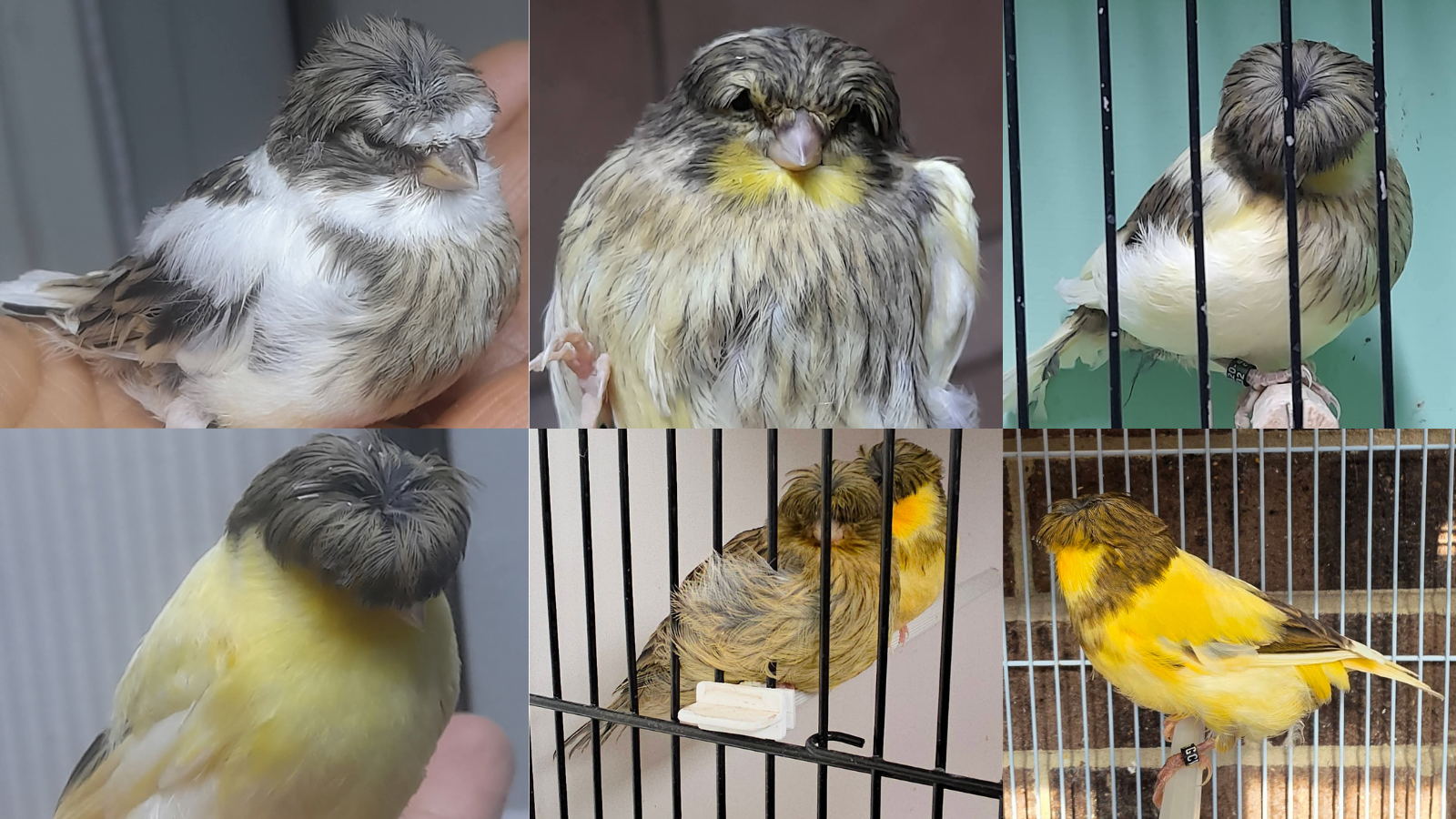
Imagine standing before a bench of hundreds of canaries, yet your eyes are immediately drawn to a tiny, “cobby” bird with a perfectly round “wig” covering its head. This is the Gloster Canary : a breed where “the smaller, the better” is the golden rule. For the modern breeder, the challenge isn’t just producing chicks; it’s the “scientific procedure” of balancing the dominant Corona (crested) gene with the Consort (plain-head) to achieve show-bench perfection. Whether you are a novice or a veteran, this guide synthesizes decades of avicultural “literature” into a practical roadmap for your next breeding season.
Table of Contents
Quick Facts for Breeders
- Scientific Name: Serinus canaria.
- Common Names: Gloster Fancy, Corona (Crested), Consort (Plain-head).
- Size: Target length of 11.5 cm to 12.1 cm (4.5 to 4.75 inches).
- Lifespan: 10–12 years on average.
- Clutch Size: 3 to 5 eggs (rarely up to 6).
- Incubation Period: 13 to 14 days.
- Fledging Age: Approximately 16 to 21 days.
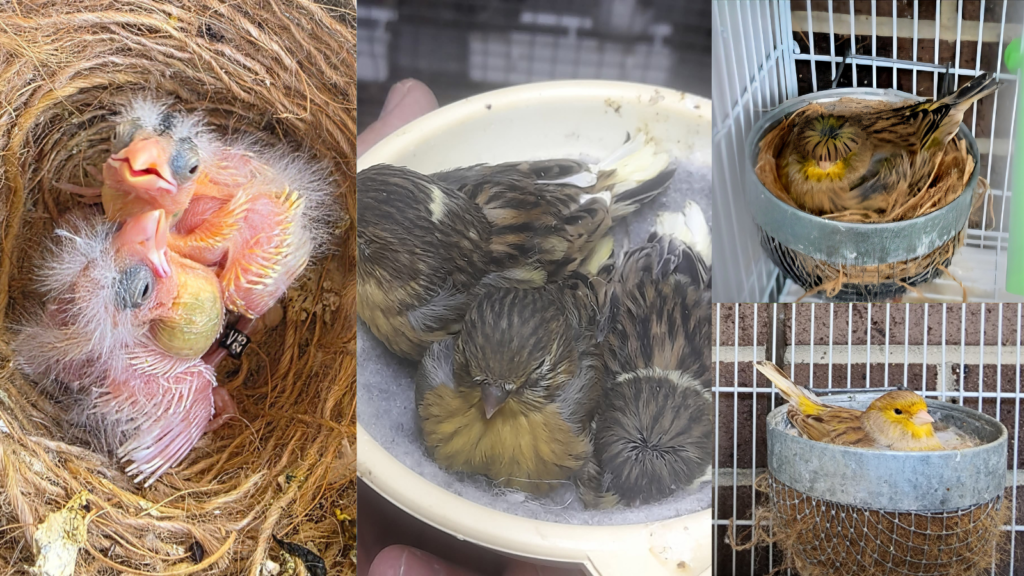
- Banding: Use 2.9 mm rings between day 5 and day 7.
Defining the Breeding Problem: The Genetic Trap
The most critical “research problem” in Gloster Canary aviculture is the Lethal Factor associated with the crest.
- The Rule: You must never cross a Corona to a Corona.
- The Science: The crest gene is dominant; pairing two crested birds results in a 25% mortality rate for the embryos (dead-in-shell) or “weak” chicks.
- The Solution: Always pair a Corona x Consort. This ensures a healthy 50/50 split of crested and plain-headed offspring.
Quantitative vs. Qualitative Standards
To succeed at a professional level in Gloster Canary breeding, you must measure your success using both “hard data” and “observational stories”.
The Numbers (Quantitative)
- Temperature: Maintain a breeding room around 18°C to 20°C with 14 hours of light to trigger the cycle.
- Weight: An adult Gloster should be light and agile, weighing roughly 12 to 20 grams.
- Feather Quality: Pair “Yellow” (short/hard feather) with “Buff” (long/soft feather) to avoid feather cysts, a common genetic issue in dense-feathered breeds.
The Experience (Qualitative)
- The Song: Listen for the male’s “vibrant, full-bodied song” to identify peak breeding condition.
- The Nest Ceremony: Watch for the hen carrying “waste” or nesting material—this is her “qualitative” signal that she is ready for the cock.
Housing & Nutrition: The Breeder’s Setup
A professional bird room for Gloster Canary requires “plenty of light, good air flow, and insulation”.
- Cages: Use rectangular breeding cages that allow horizontal flight. Avoid round cages as they stress the birds.
- Diet: The foundation is a high-quality Canary Seed mix. During the rearing phase, provide “Egg Food” (soft food) to ensure chicks get enough protein to grow their specialized plumage.
- Safety Hint: Avoid using fine-threaded nesting material (like cotton wool), which can cause necrosis or “tassel-foot” by wrapping around tiny toes.

Diagnostic Checklist for Common Issues
If your Gloster Canary breeding season hits a “gap,” use this diagnostic approach:
- Clear Eggs? Check if the male’s vent is trimmed (excess feathers can block fertilization) or if he is too fat.
- Going Light? If birds lose weight despite eating, test droppings for Coccidiosis or Black Spot (circovirus).
- Respiratory Clicking? Likely Air Sac Mites; treat topically with moxidectin or ivermectin.
FAQ
- How do I tell the difference between a male and female Gloster Canary? The only “sure-fire” way is the male’s full-bodied song; hens only chirp or make fragmented sounds.
- Why is my Gloster losing feathers on its head? This is often “male pattern baldness” or a result of over-breeding/stress.
- When should I band my Gloster Canary chicks? Glosters are typically banded with 2.9 mm rings between 5 to 7 days old.
- What is the “Standard of Excellence”? The IGBA looks for a bird that is “cobby,” short-necked, and “diminutive,” with a crest that does not hide the eyes.
Did you enjoy this article?
Help other pet lovers benefit too — Share it on social media! 🐾💚
Leave a Reply