
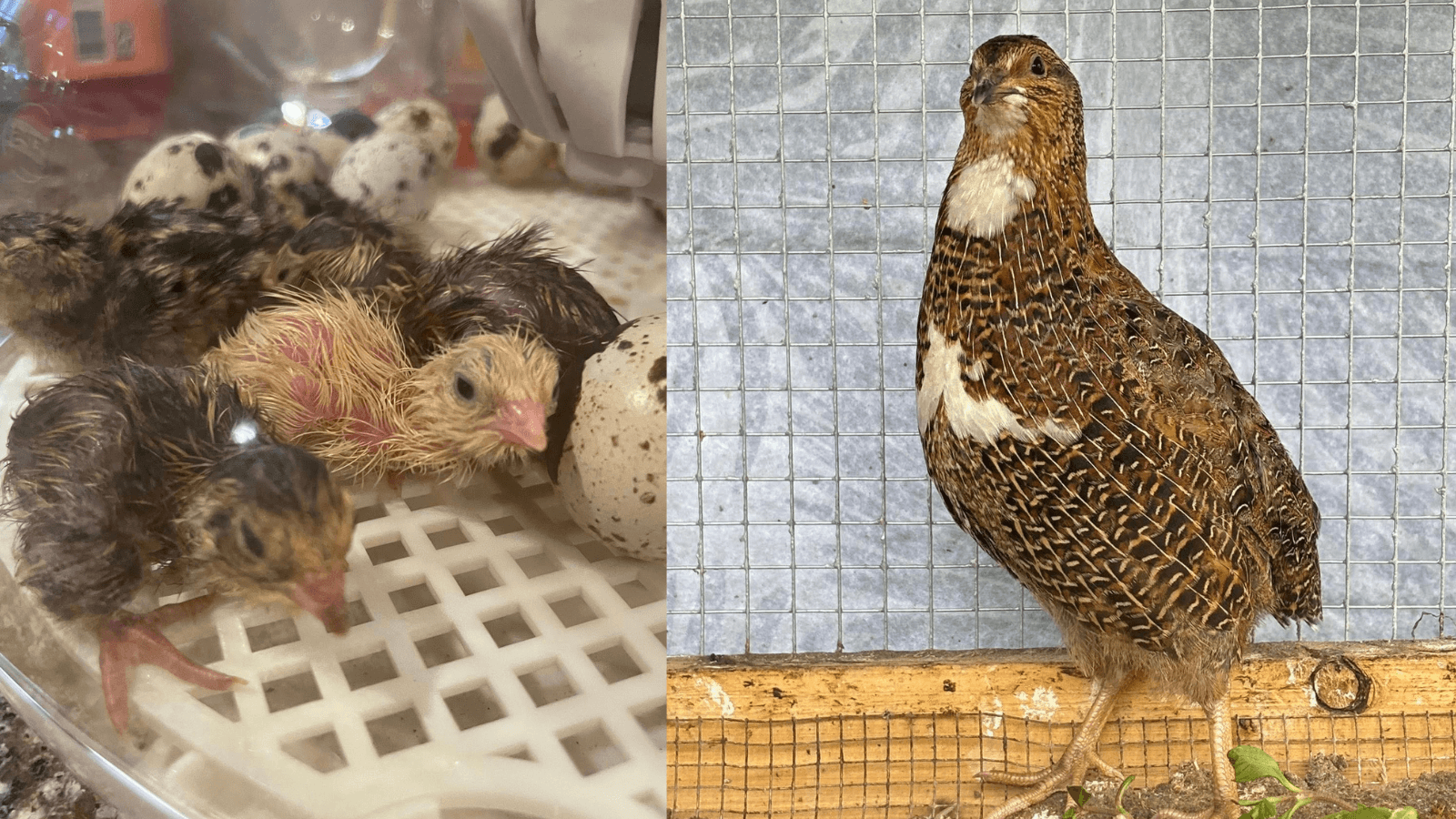
Quails are not poultry; they are game birds belonging to the family Phasianidae, a large group that includes partridges and old-world quails. While they can be observed in their natural state in the wild, their alertness makes them difficult to observe. In their natural habitat, they live as a flock (called a covey, bevy, or flock) and feed on grains, insects, seeds, and plant leaves. Certain indigenous species are migratory.
The domestication of quails is popular worldwide, largely for their nutritious eggs and delicious meat. This guide is dedicated to providing aviculturists and keepers with practical, breeder-oriented care instructions, focusing on the steps necessary for successful, high-yield breeding quai
Table of Contents
Summarized Basic Facts About Quail
Quails are small, chubby game birds, covered in feathers that can range from bluish to gray, depending on the breed. They typically measure 5.8 to 8.5 inches long and weigh around 4 ounces.
| Quick Facts | Detail |
|---|---|
| Scientific Name | Coturnix japonica (Japanese Quail) / Coturnix ypsilophora (Brown Quail) |
| Common Names | Quail, Game Bird, Old-World Quail, King Quail |
| Size | 5.8 to 8.5 inches long (16–23 cm in height) |
| Weight | Approximately 4 ounces |
| Lifespan | 3–5 years (Specific to Chinese Painted Quail) |
| Sexual Maturity | 5–6 weeks (Layers begin laying at 6 weeks) |
| Clutch Size | Varies by species (e.g., 12 eggs noted for Brown Quail) |
| Incubation Period | 16–18 days |
| Temperament | Generally cool; adult pairs are determined defenders of territory. |
- Classification: Game birds in the family Phasianidae.
- Social Structure: They live as a covey, bevy, or flock.
- Diet in the Wild: Grains, insects, seeds, nuts, berries, roots, and plant leaves.
- Eggs: Quail eggs have up to four times the nutritional content of a chicken’s egg.
- Meat: Quail meat is rich in Vitamin B Complex, Vitamin E and K, Iron, Phosphorus, Thiamine, Zinc, and Copper.
- Predators: Susceptible to attack by snakes, cats, dogs, skunks, foxes, and owls.
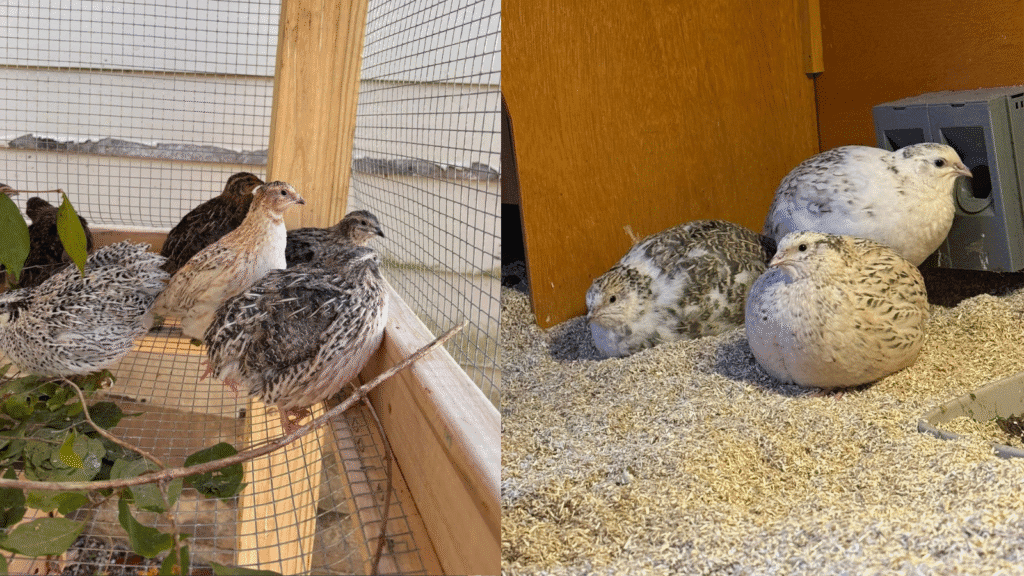
Four Vital Essentials To Help You Raise Healthy Quails
To successfully raise a healthy flock of quails, focus on these four critical areas:
- Knowledge Base: Acquire relevant and up-to-date information on quail farming and market trends. Secure any necessary legal documentation to prevent interference.
- Genetics and Stock: Start with the right breeds that have a known genetic ability for high yield, matching your purpose (egg or meat production). The quality of input is directly proportional to the quality of output.
- Secure Housing: Provide a correct, secure, and noise-free housing facility with minimal distractions. Avoid overcrowding the birds. The location must be secure against predators and rodents.
- Nutrition and Health: Arm yourself with the right knowledge on quail feeds and effective disease management practices.
Housing – The Three Most Common Options
Providing the correct housing is vital for minimizing stress and maximizing productivity when breeding quail.
1. Use of Cages
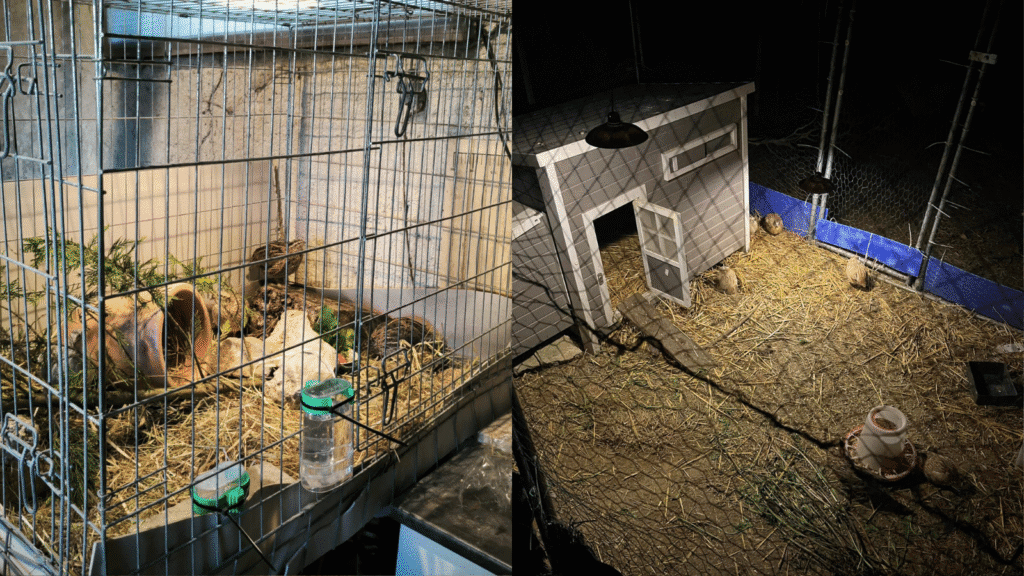
Cages are commonly built with wood and wire mesh. A good recommendation is to provide 2 square feet per bird. The floor of the cages should use a wire mesh capable of letting droppings fall off easily while preventing predator access. Cages should be roomy enough, as stressed birds are unproductive.
2. Use of a Coop/Pen or House
These are typical house-like structures. Due to the ammonium-like smell of droppings, they are often placed outdoors. If the birds are raised on a solid floor, spread wood shavings or sawdust to absorb moisture and make cleaning the dry crumbs of droppings easy. Unutilized buildings, like sheds or barns, can be converted into coops by properly covering them with wire mesh to prevent escape and protect from predators.
3. Use of an Aviary
An aviary is a spacious enclosure where birds can move freely. While Chinese painted quails are excellent aviary cleaners, feeding on spilled food and helping save costs, keeping quails in an exposed aviary may lead to lower egg production, especially if other birds are present, and can expose them to extreme temperatures. Crucially, for territorial breeds like the Brown Quail, the rule is strictly one pair to each aviary. Any adult pair will promptly deal with intruders.
Note: If you intend to let quails roam, you must clip their wings, as they fly short distances and can easily vanish.
Sexing – How To Tell If A Quail Is Male Or Female
Identifying sex is essential for proper pairing when breeding quail.
- Physical Appearance: Females of many breeds appear slightly bigger than their male counterparts of the same age.
- Chest Color Patterns: This is ideal for speckled breeds like the Japanese quail. Female quails have speckled feathers on their chests, while males have plain feathered chests.
- Examining the Vent/Cloaca (The Most Effective Way):
- Male Sign 1 (Lump): Press the area around the vent with two fingers; a small, ball-like lump may pop forward.
- Male Sign 2 (Foam): When pressing the vent, you may see white foam coming out of it.
- Female Sign: Neither the lump nor the foam will appear.
- Roosting: At five weeks, many male quails begin to make a distinctive sound or noise (roosting), which can help distinguish them from the quieter females.
How To Raise Healthy Quails
Healthy quails provide higher quality eggs and meat, mature faster, have a longer lifespan, and are cost-effective to raise.
- Sunlight: Occasionally expose the birds to sunlight for Vitamin D to develop strong bones.
- Diet & Hydration: Provide nutritious, well-balanced feeds and plenty of clean, fresh water at room temperature.
- Grit: Provide sand as grit to aid in food digestion.
- Supplementation: Hang greens (vegetables) to supplement their feeds and keep them busy. For layers, offer oyster shells or limestone to boost calcium for strong eggshells.
- Sanitation: Always exercise good grooming and sanitation. Disinfect cages, waterers, and feeders correctly to contain the spread of diseases. Unsanitary conditions can invite external parasites (ticks, lice) that cause life-threatening diseases.
- Environment: Raise birds in a peaceful, noise-free environment, as noise deters productivity.
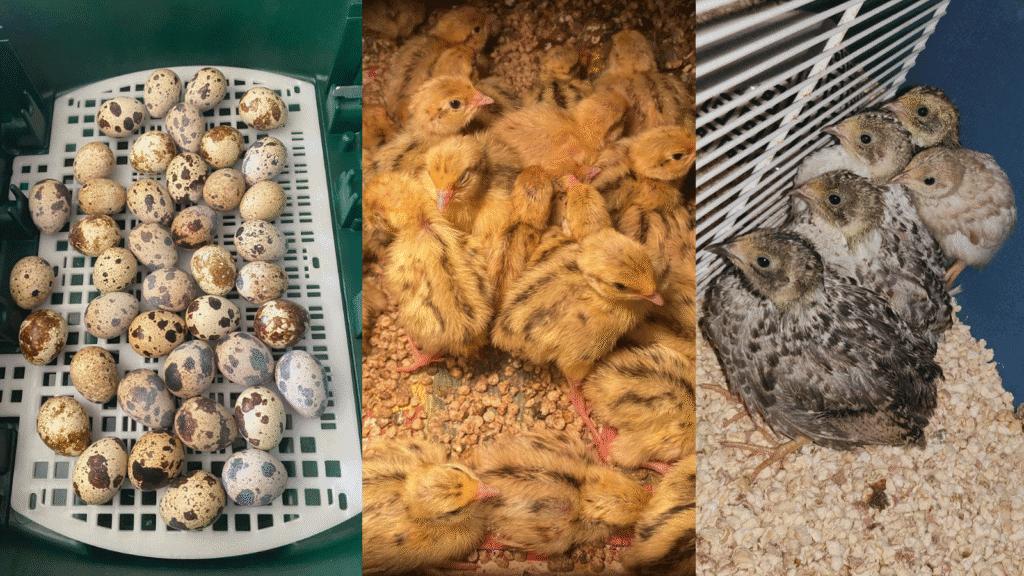
Breeding Quail Management and Incubation
Pairing for Fertility
The foundation of successful breeding quail is correct pairing. The ideal ratio to guarantee high fertility is one male to utmost three females. However, one male to two females is generally most effective, yielding a better result (often over 80% fertility rate). This right pairing prevents fighting among hens over the male and avoids attacks on the male.
How To Take Care Of Fertile Quail Eggs Before Incubation
The handling of eggs between laying and incubation is crucial for high hatch rates.
- Collection: Collect eggs daily, two to three times each day, to prevent them from becoming dirty, losing shell moisture, and being cracked by the birds.
- Handling: Handle eggs with care due to their delicate shells.
- Storage Conditions: Store eggs at room temperature in a humid location (ideal is around 50°F and 65% humidity). You can cover them with a polythene plastic bag to preserve moisture.
- Incubation Age: Eggs must be incubated at seven days old and below. Eggs older than ten days have a low to nil hatch rate.
- Pre-Incubation: Before setting, ensure eggs are clean and the incubator is correctly sterilized.
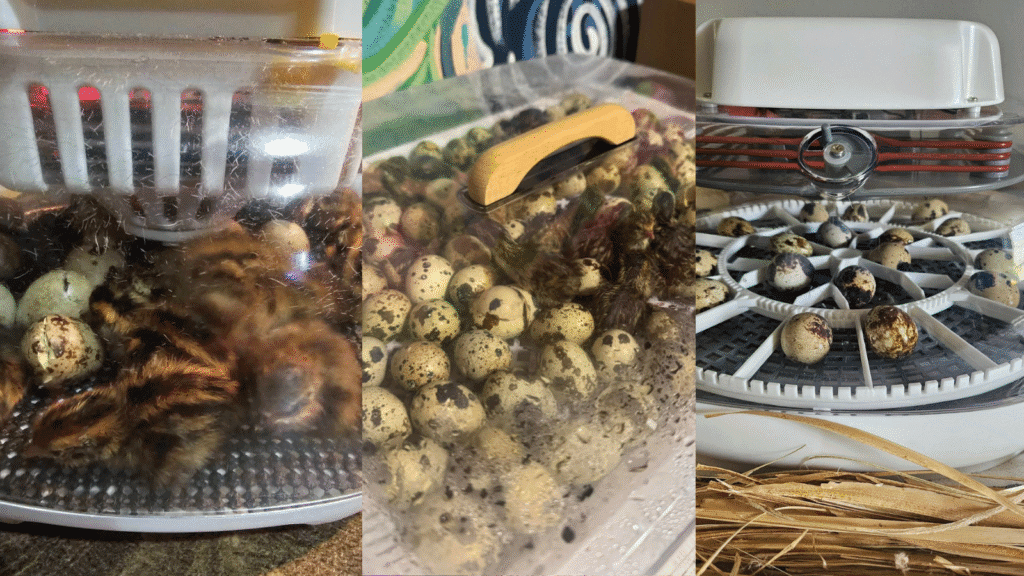
Candling Quail Eggs
Candling is the act of examining an egg against a light source (torch, candling lamp) to detect defects or check fertility.
Signs Of Good Eggs Suitable For Incubation/Consumption
- Oval shape.
- Clean, clear, and firm eggshell.
- A single, centered, yellowish yolk.
- Clear, thick, and firm albumen.
- Free of blood spots/meat spots around or in the yolk.
Signs Of An Abnormal Quail Egg
- Soft or thin eggshells (due to premature laying or nutritional/disease issues).
- Dark spots, blood spots, or a bloody ring around or in the egg yolk (sign of broken blood capillaries, potentially infertile/unfit for consumption).
- Abnormal yolk color (normal is yellow).
- Absence of egg yolk or presence of a double yolk.
Candling for Fertility
- Day 7: A fertile egg will show a reddish embryo. An infertile one will show a clear embryo.
- Day 13-14 (If Unsure): If the chick is present, the embryo will appear dark, or the light may not penetrate the shell. If the chick is absent, you will see a larger section of clear embryo with a tiny air space.
Quail Egg Incubation
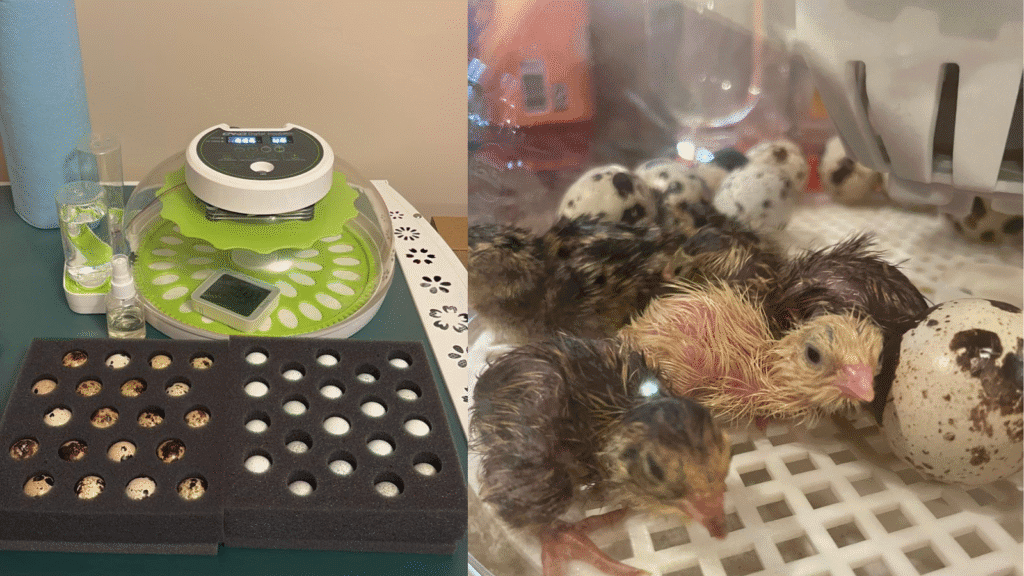
Since most domesticated quails are not reliably broody, the artificial egg incubator is the ideal method. Quail eggs can be hatched in most normal chicken-type incubators, but they need proper trays.
- Temperature: Maintain temperatures between 37.5°C (99.5°F) to 38°C (100.5°F).
- Humidity: Keep humidity at 40%-45% during incubation, adjusting it upward to 60%-65% during the last four days to hatching to help cracking.
- Turning: Religiously turn the eggs at 180° at least three times every 24 hours to ensure uniform heating. Stop turning during the last 48 hours (day 15 onwards) to hatching.
- Power: Have a standby power back-up to stabilize temperature during blackouts, as prolonged unfavorable conditions can make eggs stale.
- Hatch Time: Quail eggs generally take an average of 16–18 days to hatch under proper incubation conditions, though some breeds may hatch as early as the 14th or 15th day.
Reasons For Poor Egg Hatch, And Possible Solutions For Each Case
| Reason for Poor Hatch | Possible Solution |
|---|---|
| Incubating infertile eggs. | Ensure correct male-to-female pairing. Candle eggs before setting and again around Day 7–14 to detect infertile eggs. |
| Incubating abnormal eggs. | Candle all eggs before setting to remove eggs with cracks, contamination, or yolk defects. |
| Failure/Irregular turning of eggs. | Turn eggs at least three times every 24 hours, or use an automatic incubator with proven turning capability. |
| Lack of favorable incubator conditions (Temp/Humidity/Air). | Use proven incubators. Use a power back-up to stabilize temperature during blackouts. |
| Eggs are too old or from older birds. | Incubate eggs that are a maximum of 7–8 days old. Use eggs from younger, but mature, breeding stock. |
How To Raise Quail Chicks In The Right Way (Brooding)
Once chicks hatch, they are transferred to a brooder, which provides the necessary essentials for growth.
Brooder Essentials
- Heat Source & Temperature Control:
- The brooder needs a heat source (bulbs, gas, or charcoal burners).
- Temperature: Keep it at 95°F during the first week, and lower it by 5°F each passing week until the fourth week, when the heat is gradually withdrawn.
- Monitoring: Use a thermometer or watch the chicks’ behavior: crowding suggests cold; hiding suggests too much heat; evenly spread suggests correct temperature.
- Litter:
- Litter absorbs moisture and keeps the brooder warm. Options include sawdust, wood shavings, or paper cuttings.
- Recommendation: Paper cuttings are preferred, as chicks may confuse sawdust with feed.
- Sanitation: Timely discard used litter to curb disease spread.
- Waterers:
- Waterers must be clean and set up so chicks cannot step or defecate in them.
- Drowning Prevention (Crucial): Fill waterers with glass marbles or pebbles during the first two weeks to prevent chicks from drowning. Drowning is a leading cause of early mortality.
- Feeders:
- Feeders should be clean, adequate, and placed conveniently.
- Feeds: Start with game bird feeds or turkey feeds (starter) with an average protein component of 25%.
- Transition: At four weeks old, transfer birds to cages and prepare to change their feed to layers mash, as most breeds start laying eggs at six weeks.
- Ventilation and Light:
- Ensure adequate circulation of fresh air for gaseous exchange and to prevent respiratory infections.
- The brooder must be correctly lit so chicks can easily see food and water.
Additional Care: If you want to raise cannibal-free birds, debeak them at two to three weeks of age, possibly using an improvised nail clipper.
FAQ
- What is the ideal pairing ratio for breeding quail to guarantee high fertility? The most effective pairing is one male to two females, though one male to a maximum of three females is considered ideal to yield high fertility rates.
- How long can I store quail eggs before incubation for a good hatch rate? For the highest hatch rate, eggs should be incubated at seven days old and below. Eggs older than ten days have a low to nil hatching rate.
- What temperature and humidity are needed inside the incubator for quail eggs? Maintain the temperature between 37.5°C (99.5°F) and 38°C (100.5°F). Keep the humidity at 40%-45% throughout the incubation period, increasing it to 60%-65% during the last four days before hatching.
- How can I prevent my quail chicks from drowning in the waterers? During the first two weeks, place glass marbles or pebbles inside the waterers. This prevents the small chicks from stepping into the water and drowning, which is a leading cause of early mortality.
Did you enjoy this article?
Help other pet lovers benefit too — Share it on social media! 🐾💚
Leave a Reply