

Table of Contents
Introduction
Parakeet care: Parakeets are not a separate taxonomic family but a term widely used by practicing bird keepers. They generally refer to parrots with a long tail. The entire group belongs to the order Psittaciformes (Parrots) and the family Psittacidae.
The key distinction between a Parakeet (in the common avicultural sense) and a larger Parrot often comes down to size and tail length.
| Trait | Parrots (General Psittacidae) | Parakeets (Avicultural Term) |
| Taxonomy | All belong to the parrot family (Psittacidae). | An informal term, often refers to long-tailed parrots. |
| Tail Length | Varies (e.g., Macaws have long tails; Parrotlets have short tails). | Typically defined as parrots with a long tail. |
| Examples | Includes Macaws and large Amazons. | Includes Broad-tails/Rosellas, King Parakeets, Monk Parakeets, and Parrotlets (Forpus). |
For many parakeet species, successful captive breeding is a crucial component of preserving global populations, many of which have grown endangered due to man’s progressive destruction of nature.
🥕 Diet: Wild Habits vs. Captive Care
Wild Parakeet Diet
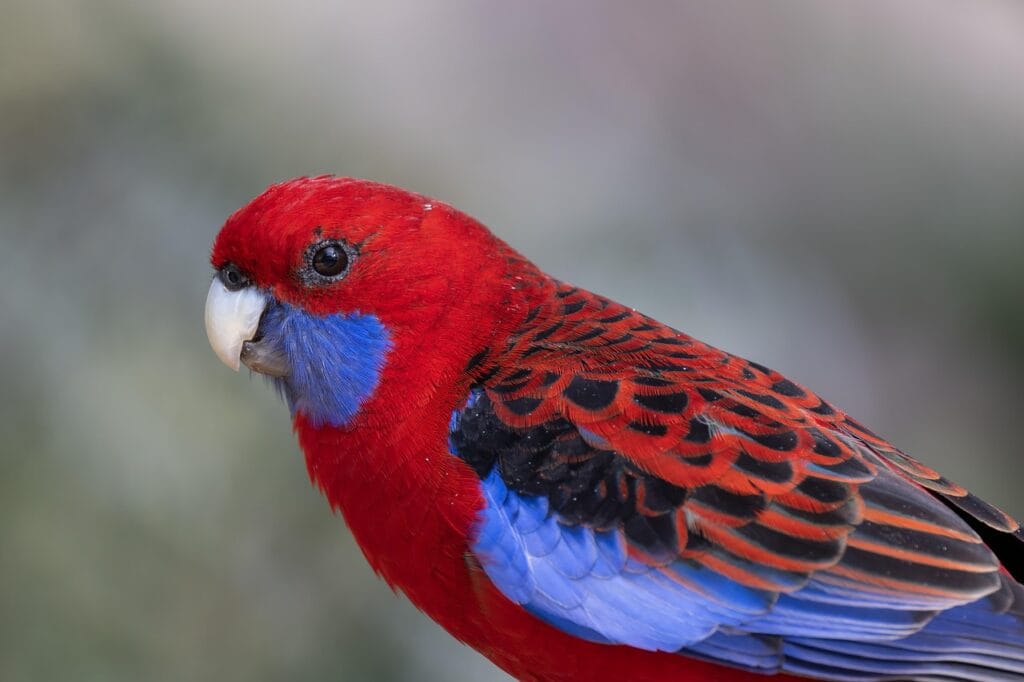
The diet of wild parakeets is diverse, but predominantly consists of seeds. Staple food often includes grass seeds, supplemented with fruits, blossoms, buds, and leaves.
- Animal food, such as insects and their larvae, is likely more significant than commonly supposed.
- For seed-eating species, the ingestion of sand and small stones (grit) is crucial for digestive processes inside the gizzard.
- Charcoal is also readily ingested by some Australian species, having a known therapeutic action for digestive upsets.
Captive Parakeet Diet
The staple diet (hard food) should contain the same basic substances as wild food.
- Staple: Millet and canary seed are suitable for all parakeets. Sunflower seeds (containing oil) are an absolutely essential component.
- Greenstuff: Fresh greens, like spinach or cress, must be supplied daily. Year-round vegetable sources include apples and carrots, which are excellent sources of vitamins, notably Vitamin A.
- Weeds: Seeding weeds such as chickweed and dandelion heads are of vital significance for good breeding results.
- Minerals/Vitamins: Supplements providing calcium and other minerals (soda, phosphorus, manganese, etc.) are absolutely vital and should be available all year round.
- Fattening Seeds: Oily seeds like hemp and niger are fattening and should only be offered judiciously, such as on cold winter days or during the molt for extra energy.
🏡 Housing & Aviary Setup
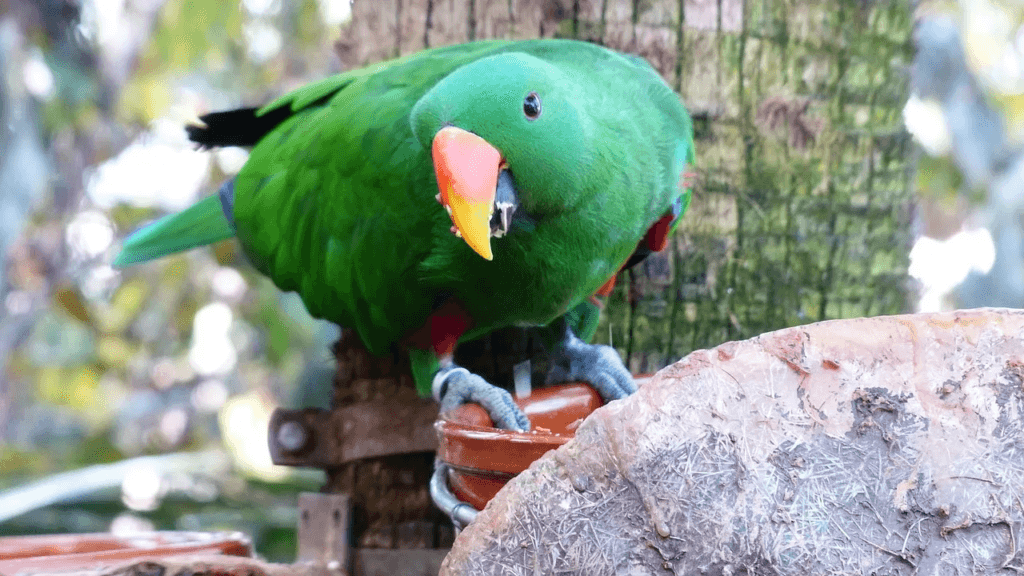
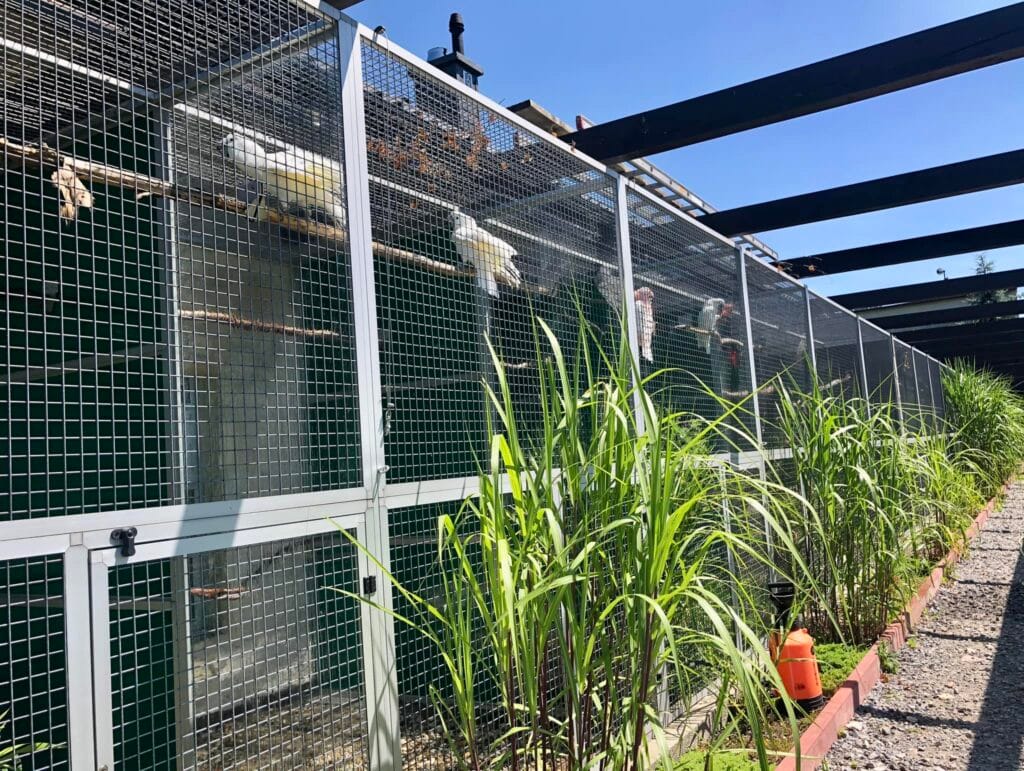
Large parakeets, especially the Australian species which are long-distance fliers, are poorly suited for life in a cage and require a spacious outdoor aviary.
- Size: The flying space (length) should generally not be less than 6 meters. For indoor shelters, a length of 2 meters is sufficient.
- Construction: All construction materials and paints must avoid lead, as parakeets gnaw at the wood. Using angle irons or galvanized tubular bars is more durable for a permanent aviary.
- Security: Foundations must be concrete, sinking at least 80 cm into the ground, to keep out rodents. Use spot welded and galvanized quadratic wire mesh that is thick enough (ideally 1.2 mm) to resist strong beaks.
- Winter Shelter: Species from tropical or equatorial ranges must have heated accommodations during cold winter months. Cold-resistant species (e.g., Derbyan Parakeet, Crimson Rosella) can be left in unheated outdoor aviaries provided they have shelter from wind and damp.
- Perches: Provide natural branches of different diameters (e.g., oak, beech). Indoor perches should be placed high up to encourage night roosting inside.
🥚 Nestbox & Breeding Management
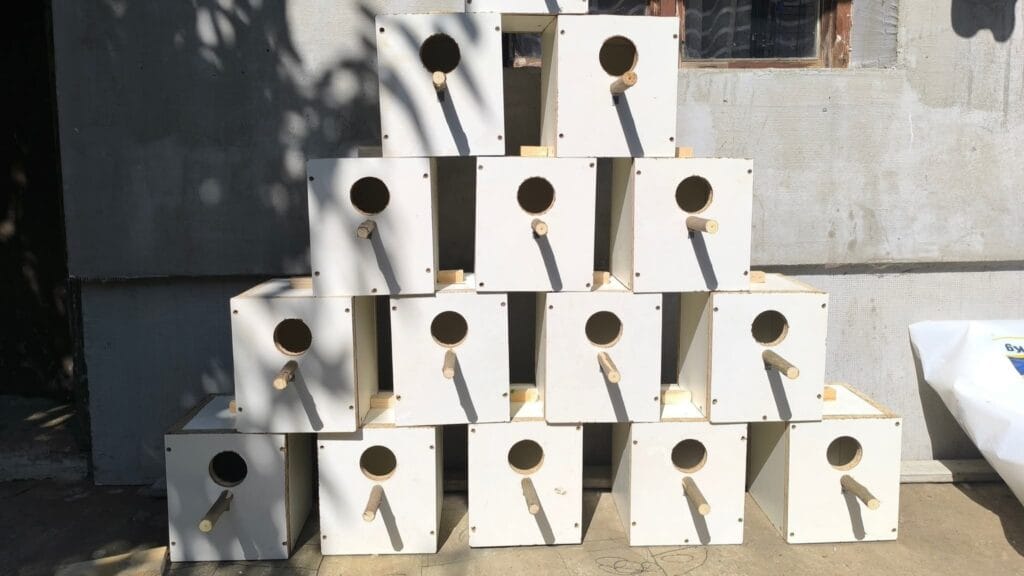
Nearly all parakeet species are cavity breeders, nesting in natural hollows, tree trunks, or occasionally rock crevices.
- Nesting Sites: Provide nest boxes or long natural hollow tree trunks. They must have a nesting hollow at the bottom. The box should be fixed securely in a quiet part of the aviary, with the entrance facing south or southeasterly.
- Box Lining: The bottom should be lined with a layer of material such as pulverized rotted wood or sawdust, placed directly on the bottom without obstructing the depression.
- Pairing: It is best to buy immature birds in the fall from different parents, as adult birds often dislike newly introduced partners.
- Acclimatization: Transfer new birds in the afternoon to allow time to find food and roost. If old birds are aggressive toward a new partner, separate them into adjacent aviaries temporarily.
- Rearing Food: Once hatching begins, gradually increase the supply of soft rearing food, germinated seeds, and fresh greenstuff, as hard food takes too long to be sufficiently predigested in the crop.
🌎 Aviculture & Conservation Notes
The primary aim of keeping and breeding parakeets is species preservation in their natural form, pure bred and healthy.
- Hybridization: Hybridization is generally discouraged as it defeats the purpose of preserving pure species. However, it often occurs, even in the wild, in genera like Platycercus (Rosellas).
- Unprotected Species: The Budgerigar, Cockatiel, and Ring-necked parakeet are exceptions and are not included in the strictest lists of protected species.
- Quarantine: All newly acquired birds must be kept in quarantine for a minimum of four weeks for observation, including regular fecal analysis, before mixing with established stock.
🎨 Major Mutation Categories
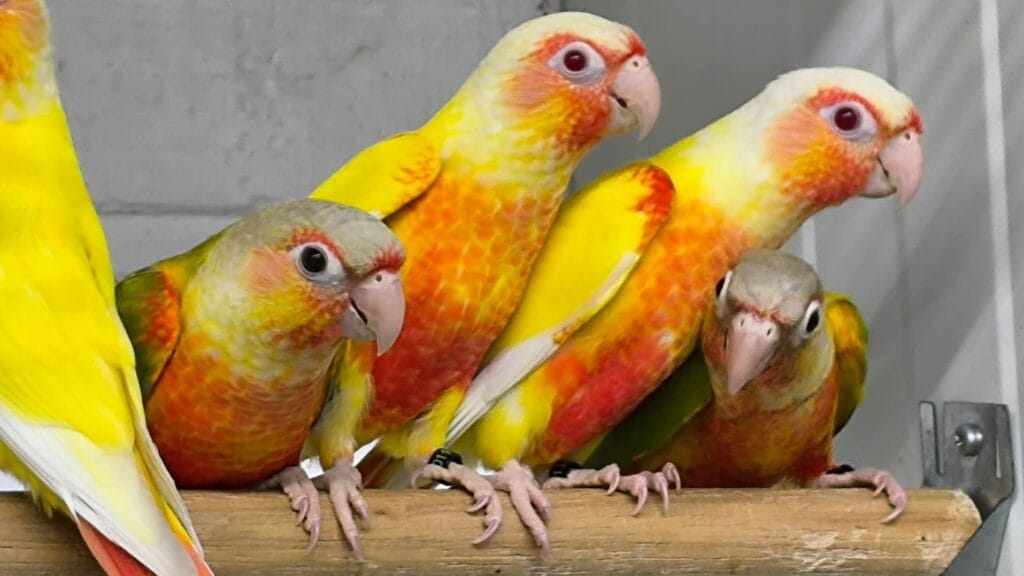
The propagation of color mutations has been a popular goal with domesticated species.
- Cockatiel (Nymphicus hollandicus): Common mutations include cinnamon, silver, pearled, pied, white black-eyed, albinos, and lutinos.
- Budgerigar (Melopsittacus undulatus): Breeders have cultivated blue, yellow, and lutino varieties.
- Other Parakeets: Blue and yellow mutations have also been cultivated in species like the Monk Parakeet and Rose-ringed Parakeet.
⚕️ Health, Parasite Control & Common Issues
Health Management
- Observation: A thorough daily check is important, as bird diseases can run a very rapid course. Signs of illness include lethargy, fluffed feathers, retracted head, and dull eyes.
- Diagnosis: Dead birds should be submitted immediately for veterinary examination (autopsy) wrapped in newspaper.
- Common Disorders:
- Egg Binding: More common in Budgerigars, often caused by cold or a lack of calcium/Vitamin D.
- Feather Plucking: Thought to be mainly caused by boredom, social stress in overcrowded enclosures, or nutritional deficiencies.
- Avitaminoses: Vitamin D deficiency leads to rickets in young birds; deficiency in Vitamin A can cause eye diseases.
Parasite Control
- Internal Parasites: Coccidians are common, thriving in damp environments. Maw worms (Ascaridia) also spread via eggs in feces. Regular fecal testing is vital.
- External Parasites: Red Bird Mites (Dermanyssus gallinae) feed on sleeping birds and weaken them. Mange Mites (Cnemidocoptes) burrow into the skin, seen as gray proliferations, commonly on the Budgerigar’s cere.
🤚 HandRearing: A Contingency Plan
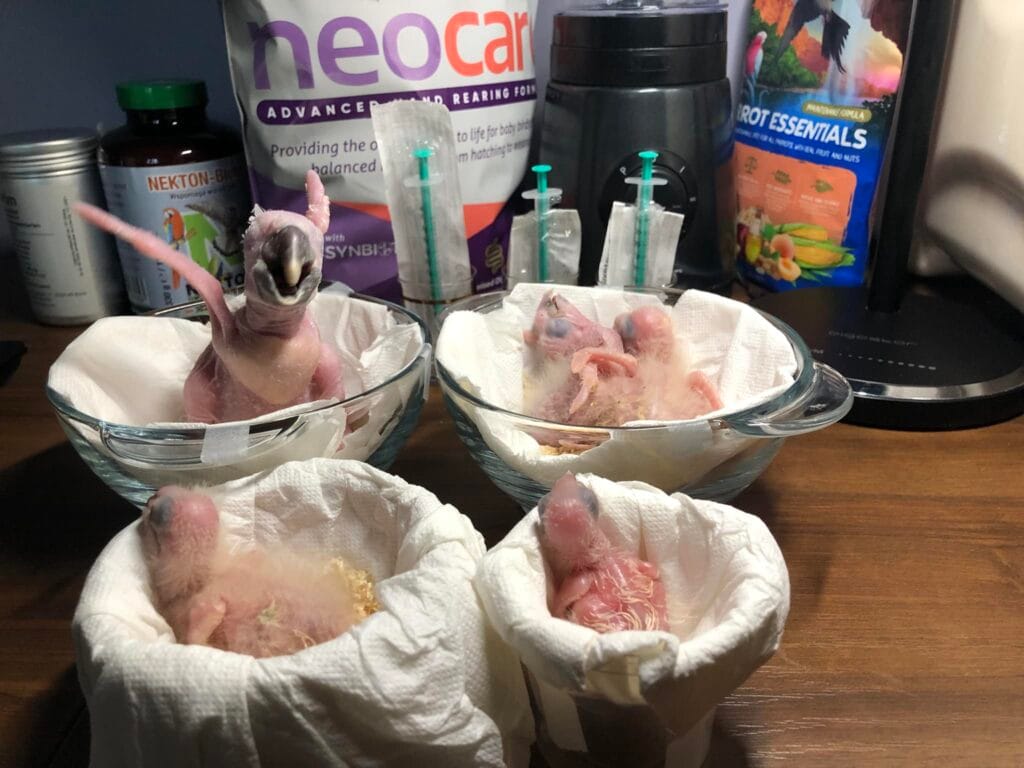
Hand rearing (artificial rearing) is a controversial subject in aviculture. While natural rearing by the parents is the best method, intervention may be necessary for preserving rare species or achieving tameness.
| Situation | Rearing Strategy | Note |
| Species Preservation | If parents fail or desert the brood, attempt artificial rearing, especially for rare species. | Be aware that hand-reared birds may develop human imprinting, potentially making them unsuitable for breeding later on. |
| Companion Birds | Hand rearing is often used if the goal is a very tame, potentially talking pet kept alone. | The resulting tameness forms a close bond with the keeper. |
| Feeding Protocol | Use baby food powder mixed into a thick pap (not liquid). Feed via a clean implement (e.g., spoon or decorating nozzle). | The mouthpiece of the feeder should be a consistent color (red has proved successful) to avoid food refusal. |
| Schedule & Diet | Feed every two hours initially, gradually extending the interval. The food must be made “coarser” as the bird grows. | Supplement the diet with multivitamins and a large dose of Vigantol (Vitamin D) twice during rearing for healthy bone growth. |
✅ Breeder’s Tips & Checklist
- Pairing: It is easier to succeed by pairing immature birds early than trying to introduce an adult partner later.
- Aviary Access: Use a separate entrance or a feeding passage to minimize disturbance to breeding pairs, as this can cause them to abandon their young.
- Ring/Banding: Close ringing should be carried out between the sixth and ninth day for most species.
- Young Independence: Juvenile parakeets are generally independent after eight weeks and can be separated from adults.
- Flight Safety: Newly fledged birds are clumsy and easily panicked. Cover the aviary wire at the ends of long flights to prevent dangerous collisions.
FAQs
Q1. Can I keep several pairs of parakeets together in one aviary?
A. Generally, no. Most large parakeet species are territorial and must be kept in pairs. Closely related species (e.g., Rosellas) should not be housed in adjacent compartments, even with wire partitions, due to intense rivalry.
Q2. How should I store my seeds and food to prevent disease?
A. All food must be in perfect condition, stored dry, and smell fresh. Reject any food that is moldy, musty, or contaminated with mouse droppings, as this can be a dangerous source of Salmonellosis.
Q3. How long can I expect my large parakeet to live?
A. Most large parakeet species can be expected to live an average of 20 years. Longer-lived species include Alexandrine Parakeets and Jandaya Conures, which have been known to live for over 30 years.
Q4. What should I do if a parakeet dies suddenly?
A. You must immediately have the bird examined. Do not freeze the dead animal. Wrap the cool body in newspaper and send it quickly to a veterinary institute for an autopsy. The results are crucial for protecting the remaining stock.
Did you enjoy this article?
Help other pet lovers benefit too — Share it on social media! 🐾💚
Leave a Reply