
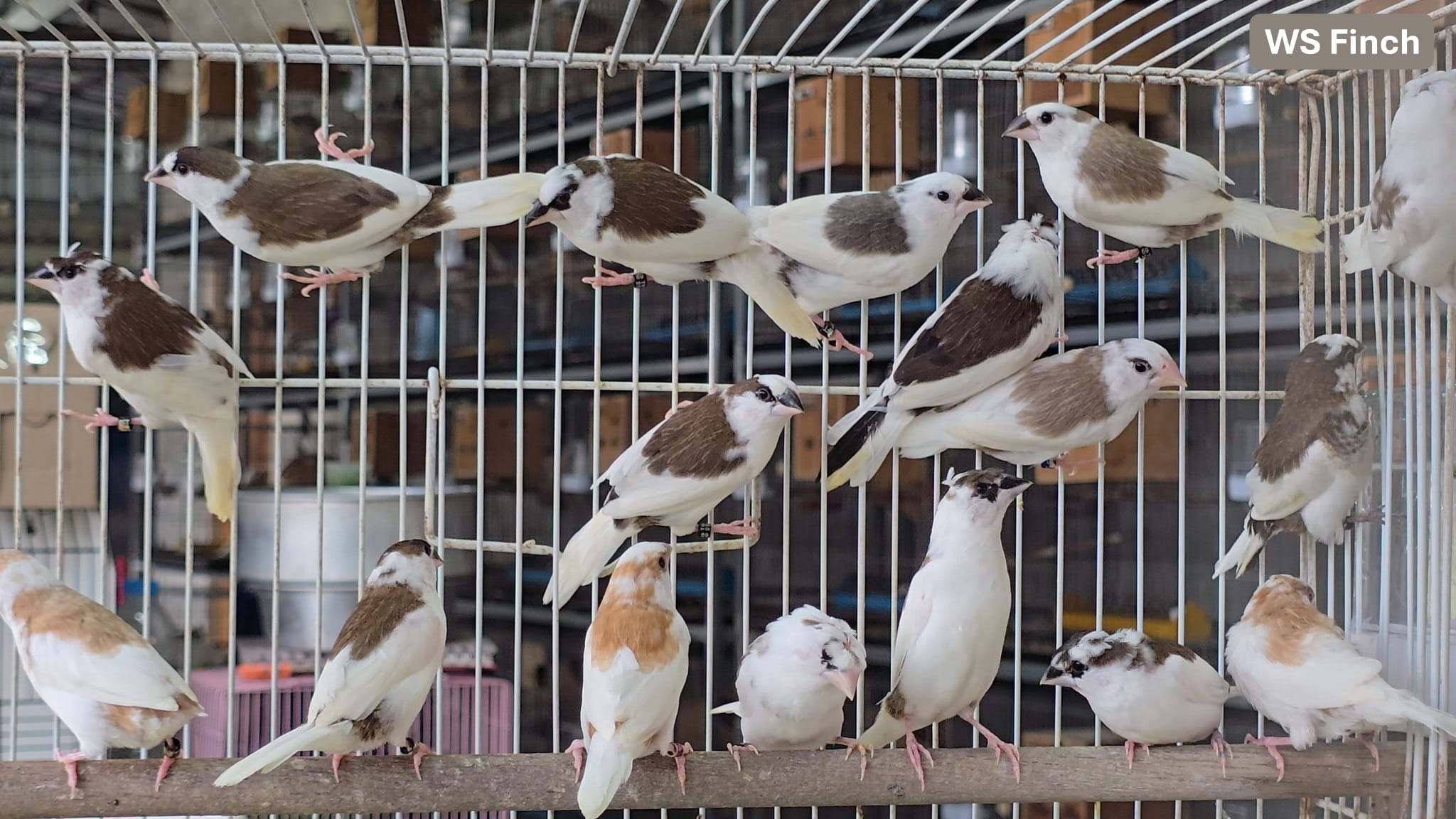
The Society finch, also known as the Bengali finch or Bengalese finch, represents a unique phenomenon in aviculture—a fully domesticated species with no wild counterpart. Developed in Japan over 250 years ago through selective breeding of various Lonchura species (primarily white-rumped munia), these charming estrildids have become the ultimate beginner’s breeding bird and indispensable foster parents for rare finch species. Their exceptional parenting instincts, prolific breeding habits, and peaceful disposition make them foundational stock in both hobby and commercial aviaries. This comprehensive guide provides practical insights for maximizing breeding success while maintaining healthy, productive colonies.
Table of Contents
Quick Facts Table
Scientific Name: Lonchura domestica (domesticated form, no wild population)
Common Names: Society Finch, Bengalese Finch
Size: 11–13 cm (4.3–5.1 inches)
Weight: 14–18 grams
Lifespan: 7–9 years (occasionally 12+ with exceptional care)
Sexual Maturity: 5–7 months (optimal breeding at 8+ months)
Clutch Size: 4–8 eggs (typically 5–6)
Incubation Period: 14–16 days (average 15 days)
Banding Schedule: Day 7–9 using 2.5mm closed bands
Fledging Age: 21–25 days (independent by day 35)
CITES Status: Not applicable (domestic species)
Temperament: Exceptionally docile, highly social, excellent colony bird
Understanding Sexual Dimorphism
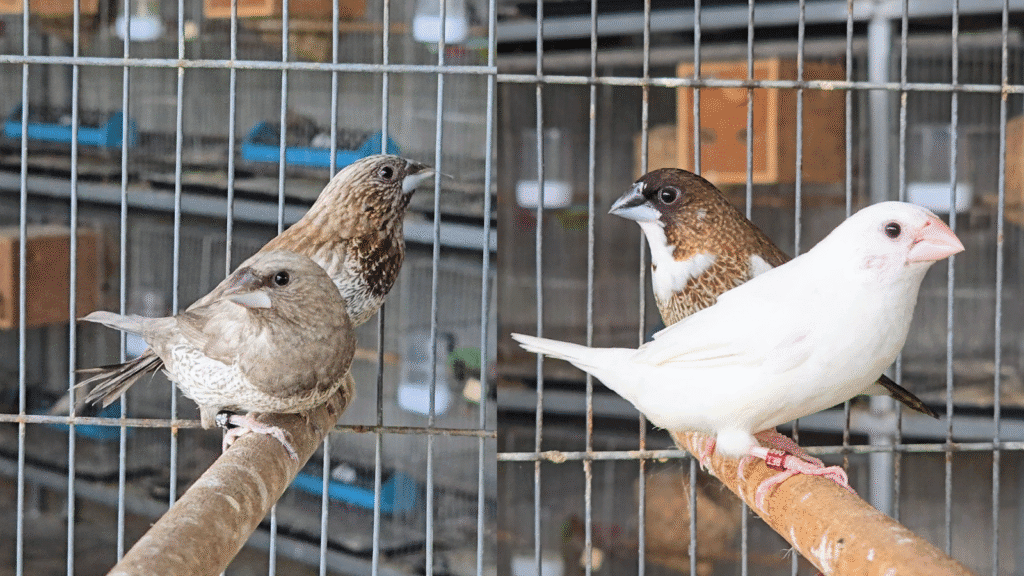
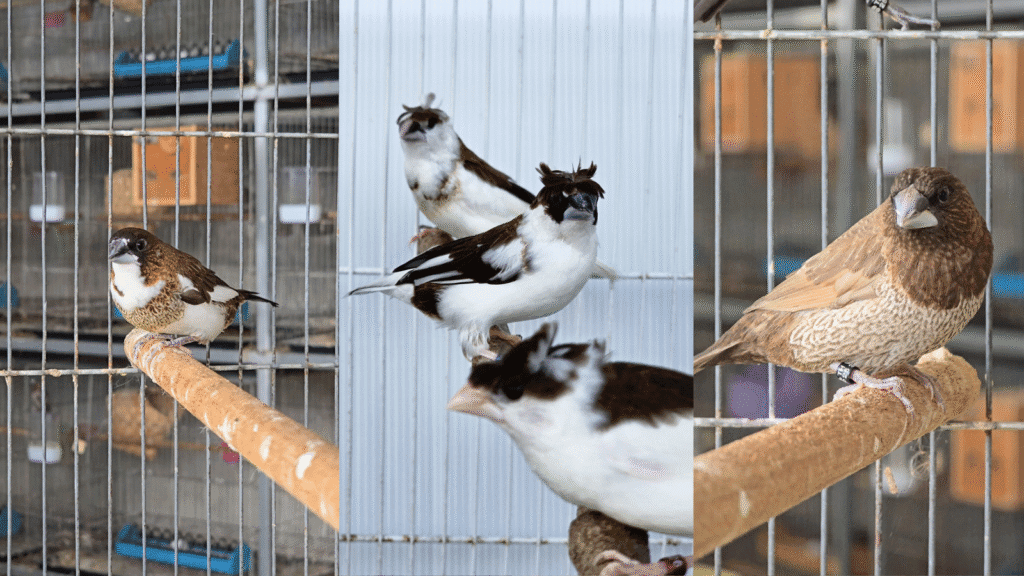
The Society finch presents one of aviculture’s greatest challenges: virtually no reliable visual sexual dimorphism. Males and females appear identical in size, coloration, and markings across all color varieties (chocolate, fawn, pied, white, chestnut).
Behavioral Identification Methods:
Males perform a distinctive courtship dance—hopping with fluffed feathers while singing a prolonged, warbling song with beak pointed upward. This “singing dance” is the most reliable sexing method. Females may sing briefly but never perform the characteristic dance display.
During breeding season, males become more animated and territorial around nest sites. Females spend more time investigating nesting materials. DNA sexing provides definitive results when visual/behavioral methods prove inconclusive, particularly valuable when establishing proven breeding pairs for commercial operations.
Nutritional Requirements: Wild Origins & Captive Diet
Ancestral Wild Diet
Society finch ancestors (white-rumped munias) inhabited Asian grasslands and agricultural areas, consuming primarily ripening grass seeds, paddy rice, small grain, and occasional insects. This granivorous foundation informs optimal captive nutrition.
Optimal Captive Feeding Protocol
Base Diet Foundation:
- High-quality finch mix containing white millet, red millet, canary seed, and Japanese millet as primary components
- Avoid mixes with excessive larger seeds (sunflower, safflower) unsuitable for small estrildids
Essential Supplements:
- Sprouted seeds: Offer 3–4 times weekly; dramatically improves fertility and chick survival
- Egg food: Commercial or homemade blend during breeding and molting cycles
- Greens: Romaine lettuce, spinach, chickweed, dandelion (pesticide-free only)
- Protein sources: Small mealworms, egg biscuit—critical during chick-rearing
- Calcium sources: Cuttlebone, crushed oyster shell, mineral grit (always available)
Hydration & Supplements: Fresh water changed daily. Add vitamin/electrolyte supplements weekly, increasing to twice weekly during breeding peaks. Avoid medicated water without veterinary guidance.
Housing Requirements & Aviary Design
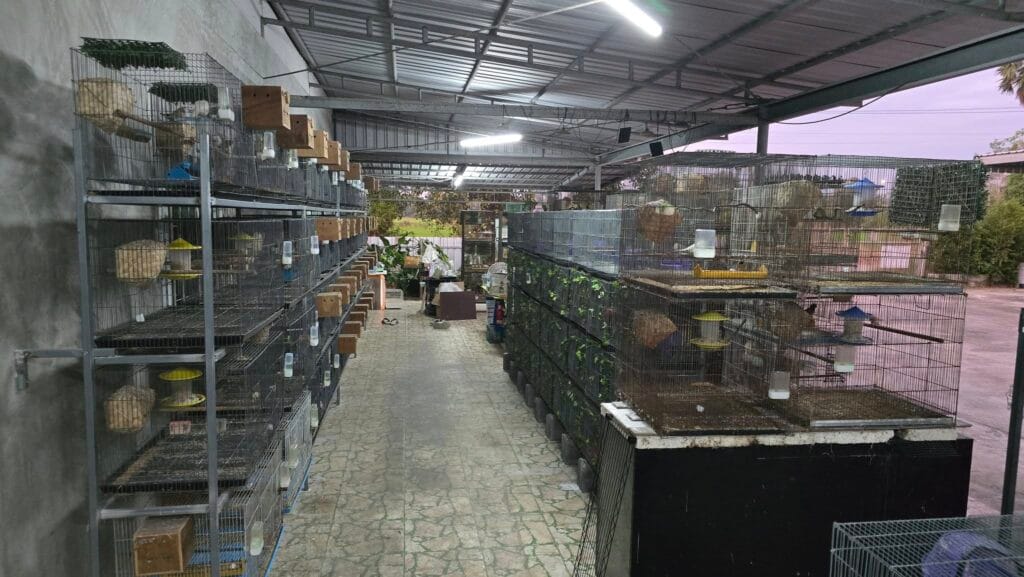
Society finches adapt to various housing configurations but thrive in specific conditions that maximize breeding performance.
Cage vs. Aviary Considerations
Minimum Breeding Cage: 80cm L × 40cm W × 40cm H per pair
Optimal Colony Aviary: 2m L × 1m W × 1.5m H accommodates 6–10 birds comfortably
Critical Housing Elements
Perching Strategy: Install perches at varying heights (8–12mm diameter) creating distinct territorial zones. Bamboo, natural branches, and dowels provide variety.
Environmental Enrichment: Unlike their wild ancestors, captive Society finches benefit from structured environments. Include nest material holders, multiple feeding stations, and bathing opportunities.
Climate Control: Maintain 18–24°C (64–75°F) for optimal breeding. Tolerate 10–30°C (50–86°F) when acclimated gradually. Provide supplemental heating in cold climates to prevent breeding disruption.
Lighting Protocol: 12–14 hours photoperiod supports year-round breeding. Gradual dawn/dusk simulation reduces stress.
Substrate Options: Newspaper, paper towels, or corn-cob bedding (replaced frequently). Avoid sand in breeding setups due to hygiene concerns.
Nestbox Selection & Breeding Management
Nest Structure Preferences
Society finches accept diverse nest types but show preferences affecting breeding success:
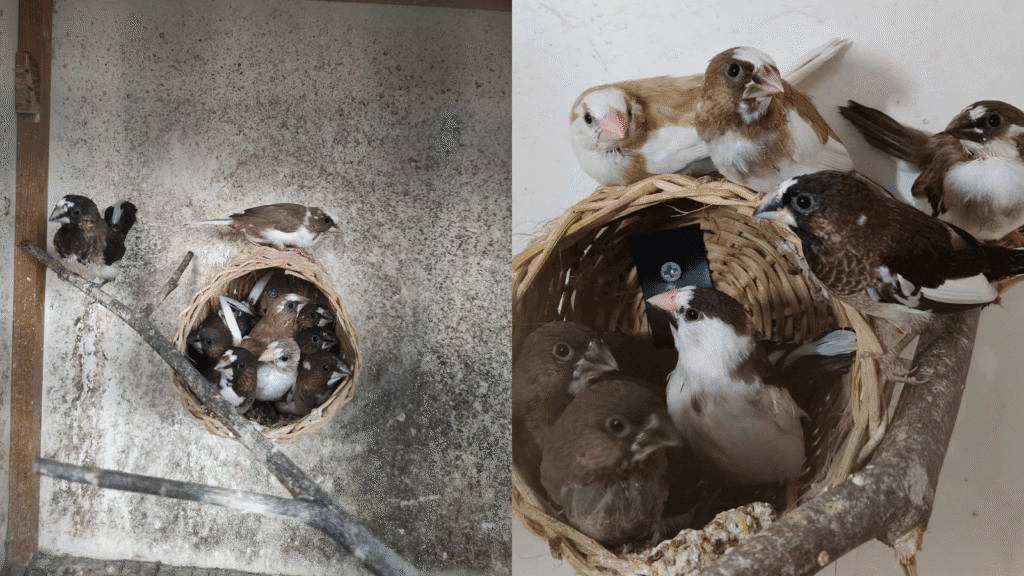
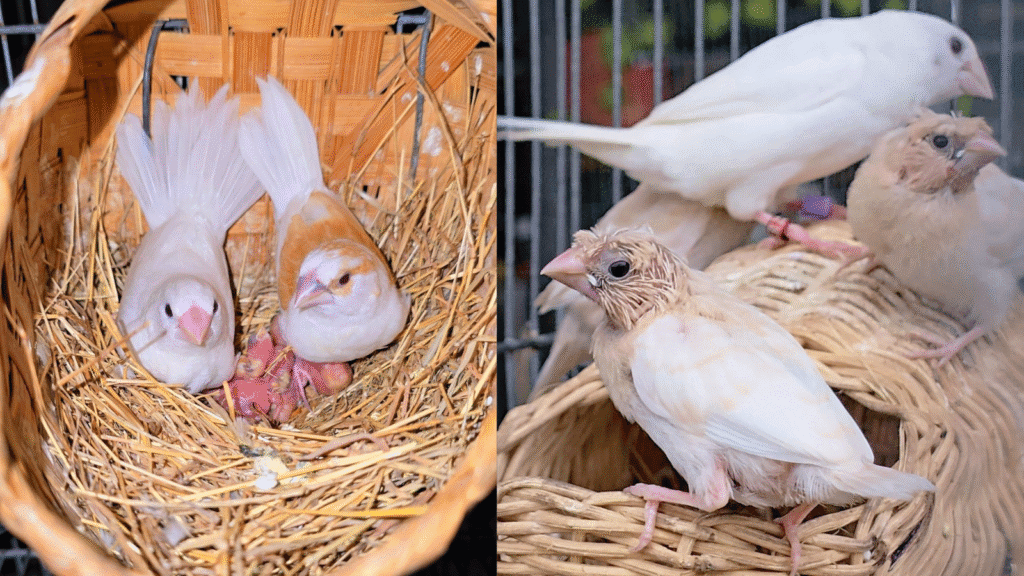
- Wicker/bamboo nests: Traditional favorite; 10–12cm diameter
- Wooden nestboxes: 12cm³ with 4cm entrance hole, mounted 30–45cm high
- Open nests: Some pairs prefer shallow wicker baskets in sheltered corners
Nesting Material Selection: Long dried grasses, coconut fiber, jute twine, and shredded paper. Avoid cotton, thread, or materials that could entangle chicks.
Breeding Cycle Management
Society finches breed continuously without seasonal restrictions when conditions permit. Both parents share all duties equally—incubation, brooding, and feeding.
Clutch Management: Monitor nests discretely; Society finches tolerate brief inspections. Remove infertile eggs after 18 days. Limit pairs to 3–4 clutches annually, then separate sexes for 6–8 weeks rest period to prevent exhaustion.
Chick Development Timeline:
- Days 1–5: Altricial, eyes closed, completely dependent
- Days 6–14: Rapid feather development, eyes open by day 8
- Days 15–21: Feathers emerge, become active in nest
- Days 22–25: Fledging begins; parents continue feeding 10–14 additional days
Foster Parenting Applications: Society finches excel as foster parents for Gouldian finches, parrot finches, and other challenging estrildids. Coordinate egg transfers when Society finch clutches reach 3–4 eggs.
Aviculture Significance & Conservation Context
While Society finches have no conservation implications (being domestic), they serve critical roles in preserving endangered finch species through fostering programs. Japanese and European breeders maintain distinct lineages with subtle differences in conformation and temperament.
Color Variety Development: Established mutations include chocolate self, fawn (dilute), chestnut, white, and various pied patterns. Breeders increasingly focus on type, size, and vigor rather than purely color-driven selection.
Genetic Considerations: Outcrossing between unrelated lines every 3–4 generations maintains vigor. Document pairings meticulously to avoid inbreeding depression manifesting as reduced fertility and chick mortality.
Health Management, Parasites & Disease Prevention
Preventive Health Program
Quarantine Protocol: Isolate new birds 30–45 days, monitoring for respiratory symptoms, diarrhea, or lethargy before introducing to existing colonies.
Parasite Control Schedule:
- Worming treatment every 4 months using fenbendazole or levamisole
- Air sac mite monitoring; treat at first sign of respiratory distress or clicking sounds
- External parasite inspection during handling; treat perches/cage with bird-safe insecticides if mites detected
Hygiene Standards: Clean food/water containers daily. Deep clean housing monthly. Disinfect between clutches using avian-safe products (F10, Virkon).
Common Health Challenges
Egg Binding: Most common in first-time layers or calcium-deficient hens. Increase humidity, provide heat, supplement calcium. Veterinary intervention if not resolved within 2 hours.
Overgrown Nails/Beak: Provide concrete perches, cuttlebone. Trim carefully if necessary; Society finches have delicate feet requiring gentle handling.
Respiratory Infections: Draft exposure, temperature fluctuations, or poor ventilation cause susceptibility. Symptoms include open-mouth breathing, tail bobbing, and nasal discharge.
Enteritis: Stress-induced or bacterial. Maintain scrupulous hygiene and minimize colony disruptions during breeding season.
Proven Breeder’s Tips & Success Checklist
✓ Colony dynamics: Maintain even sex ratios (1:1) to prevent aggression
✓ Multiple nestboxes: Provide 1.5× nests to pairs, allowing choice and reducing competition
✓ Pre-breeding conditioning: 4–6 weeks enriched nutrition before pairing
✓ Pair compatibility: Allow birds to select mates when possible; forced pairs show lower success
✓ Band records: Maintain detailed databases linking band numbers to lineage and performance
✓ Selective culling: Remove aggressive individuals immediately; temperament is heritable
✓ Foster coordination: Have Society finch pairs at similar breeding stages for emergency fostering
✓ Chick monitoring: Check nests daily for deceased chicks; remove immediately to prevent disease
✓ Environmental stability: Breeding success drops dramatically with frequent disturbances
✓ Generational planning: Retain offspring from best parents for future breeding stock
FAQ
Q: How do I definitively identify male and female Society finches?
A: Observe during breeding season—males perform distinctive singing dances with vertical posture and fluffed feathers. Females occasionally sing softly but never dance. DNA testing provides 100% accuracy when behavioral observation is inconclusive.
Q: Can Society finches raise other finch species successfully?
A: Absolutely. They’re premier foster parents for Gouldians, parrot finches, and other challenging species. Transfer eggs when Society finch clutch reaches 3–4 eggs. Remove Society finch eggs or allow them to raise mixed broods.
Q: Why do my Society finches build multiple nests but not lay eggs?
A: This indicates pre-breeding behavior. Ensure birds are 8+ months old, receiving adequate protein/calcium, and maintain 12+ hour photoperiods. Some pairs require 2–3 months after pairing before first clutch.
Q: What causes Society finch chicks to die in the nest?
A: Common causes include insufficient protein (lack of live food/egg food), inexperienced parents, environmental stress, temperature extremes, or genetic issues from inbreeding. Ensure parents have abundant high-protein foods available throughout chick-rearing.