
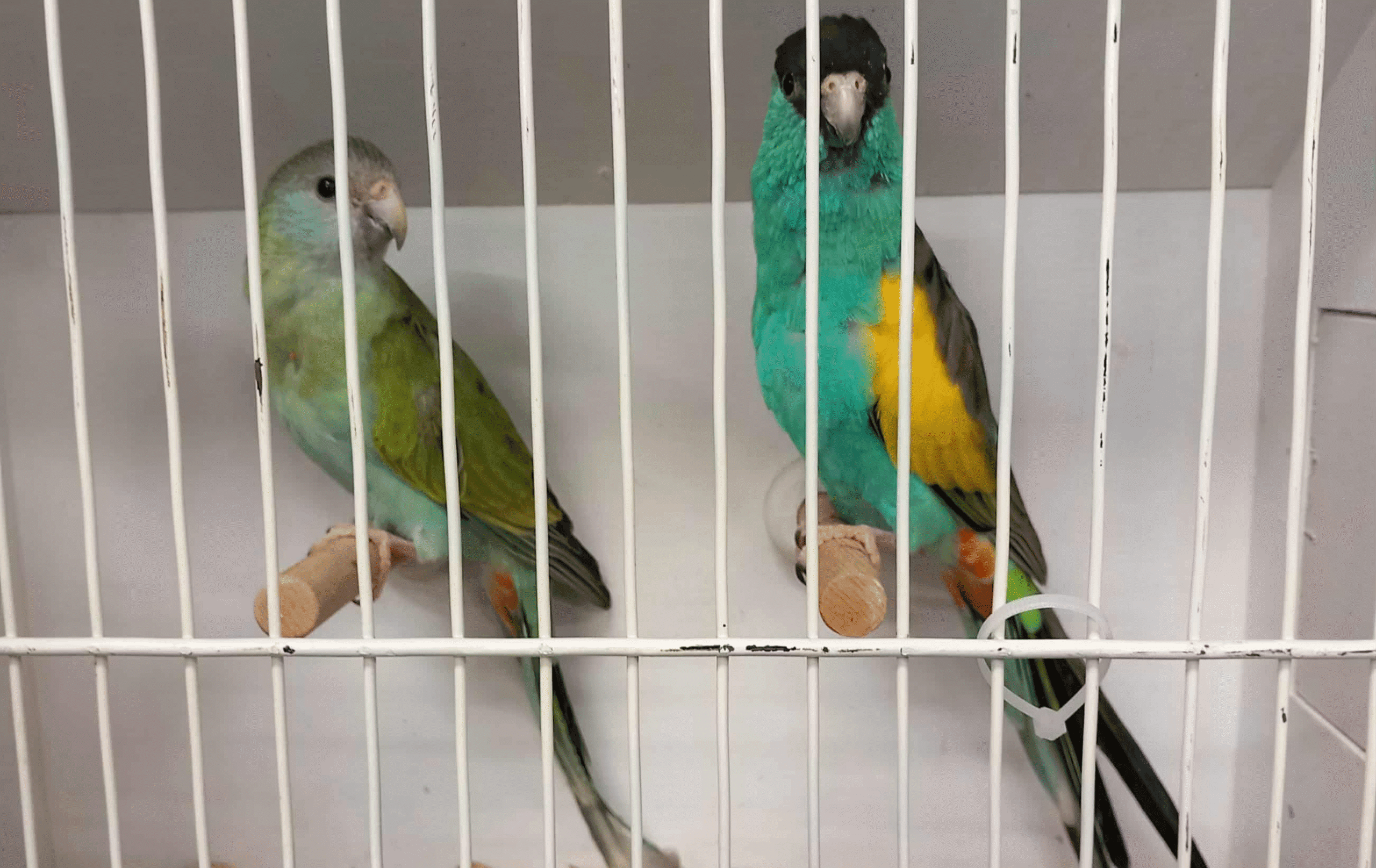
The Hooded Parrot (Psephotellus dissimilis) is one of Australia’s most striking grass parakeets, renowned for its dazzling plumage and fascinating nesting habits. Native to the Northern Territory’s savannah woodlands, this medium-sized parrot is particularly admired for its vibrant sexual dimorphism and its unusual reliance on termite mounds for nesting.
For aviculturists and bird enthusiasts, the Hooded Parrot offers both challenges and rewards. Understanding its biology, behavior, diet, and breeding requirements is key to keeping this species successfully in captivity while also appreciating its importance in Australia’s ecosystem.
Table of Contents
Quick Facts About the Hooded Parrot
- Scientific name: Psephotellus dissimilis
- Length: 26–28 cm (10–11 in)
- Weight: ~50–60 g
- Wild lifespan: 10–12 years (up to 15+ in captivity)
- Breeding season in wild: March–July (Northern Territory’s dry season)
- Clutch size: 4–6 eggs
- IUCN status: Least Concern (but locally vulnerable due to habitat change)
Sexual Dimorphism
Like many Australian parrots, the Hooded Parrot exhibits clear sexual dimorphism, making males and females easy to tell apart:
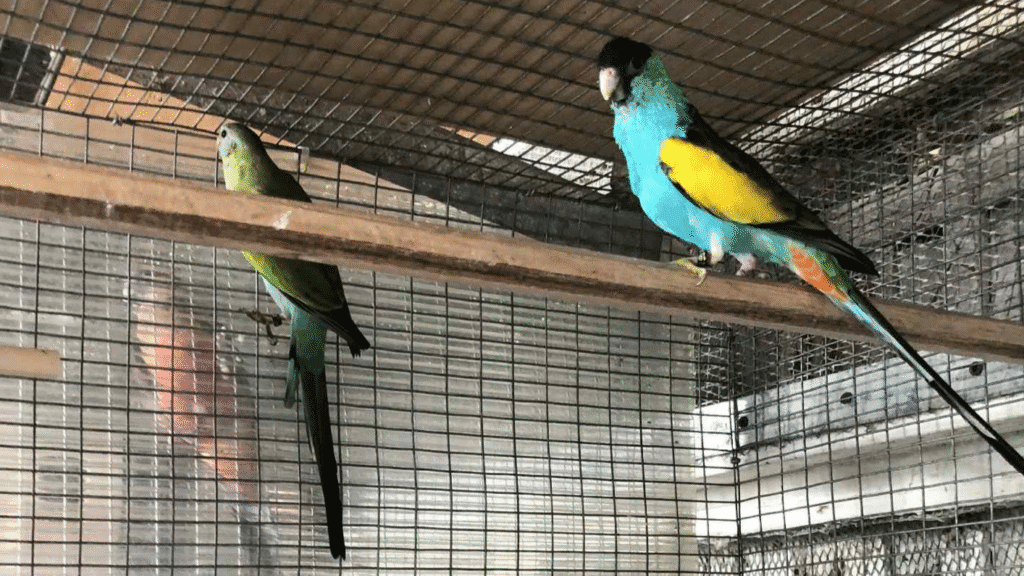
- Males: Brilliant turquoise-blue body, jet-black head (“hood”), yellow belly, and bright shoulders. Their plumage makes them one of the most colorful parrots in Australia.
- Females: Olive-green overall, with pale blue on wings and rump, and yellow underparts. Their subtler colors provide camouflage, especially during nesting.
- Juveniles: Resemble females until maturity, with young males gradually developing the black hood and turquoise plumage.
This dimorphism not only helps in visual identification but plays an important role in courtship and survival strategies.
Natural Habitat & Behavior
Hooded Parrots are native to the pine and eucalypt savannahs of the Northern Territory, where they live in small flocks outside the breeding season. They are mostly ground foragers, feeding on grass seeds and herbs.
One of their most fascinating behaviors is termite mound nesting. Unlike most parrots that nest in tree hollows, Hooded Parrots dig tunnels into active termite mounds. The termites quickly seal off the entrance, leaving a stable, insulated chamber where eggs are laid and chicks are raised.
Diet and Feeding
In the Wild
Their diet is heavily seed-based, including:
- Native grass seeds (spear grass, sorghum, and spinifex).
- Occasional berries, fruits, and insects (especially during chick-rearing).
In Captivity
Replicating a natural diet is essential for health and breeding success. Offer:
- During the growing season, sprouted grains including wheat, oats, barley, sunflower seeds, and green mung beans.
- During the rearing season, add egg mixture consisting of hard-boiled eggs (10 minutes), grated carrots, beetroot, and breadcrumbs.
- Throughout the year, as a supplement, provide apple, carrot, spinach, sour cream, plantain, lettuce, and Chinese cabbage.
⚠️ Avoid high-fat seeds like sunflower as a staple—these can lead to obesity and liver issues.
Housing & Aviary Requirements
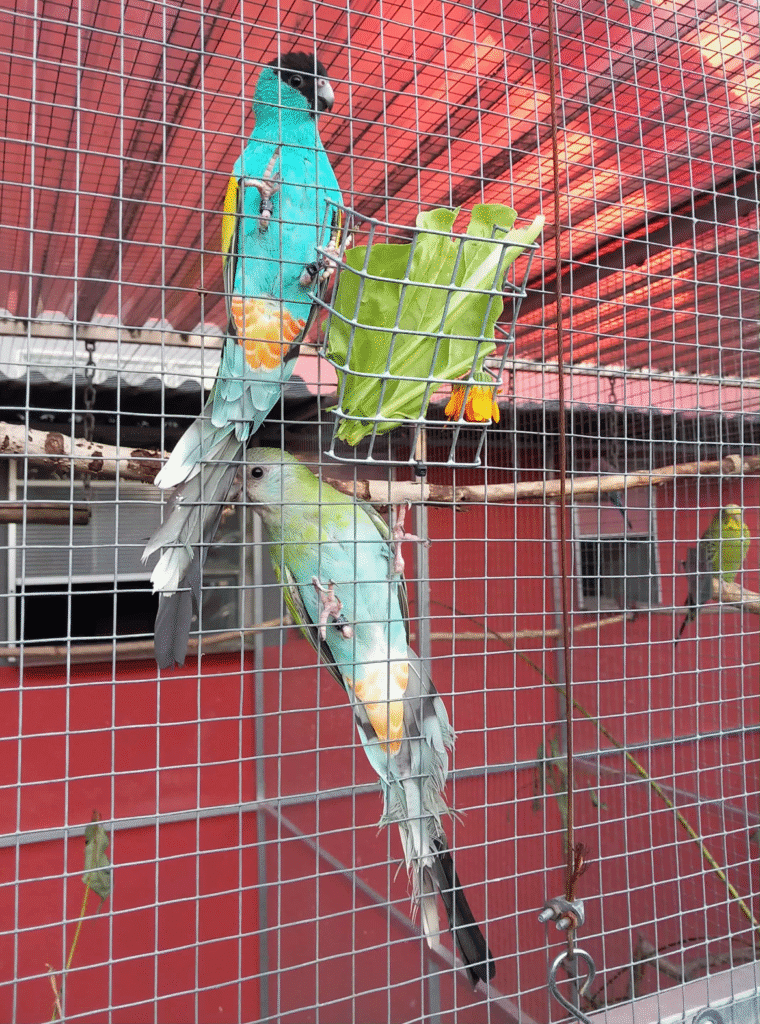
Hooded Parrots are active, strong flyers that need spacious housing.
- Aviary size: At least 3–4 m (10–13 ft) long for a pair, with ample flying room.
- Substrate: Sand or fine gravel mimics their natural environment.
- Furnishings: Perches of varying diameters, native branches, and seed trays for ground foraging.
- Social structure: They do best housed in pairs; males can become territorial during breeding, so colony setups are not recommended.
Breeding in Captivity
Breeding Hooded Parrots is both rewarding and demanding. Their reliance on termite mounds in the wild has to be replaced with artificial solutions in captivity.
Nestbox Recommendations
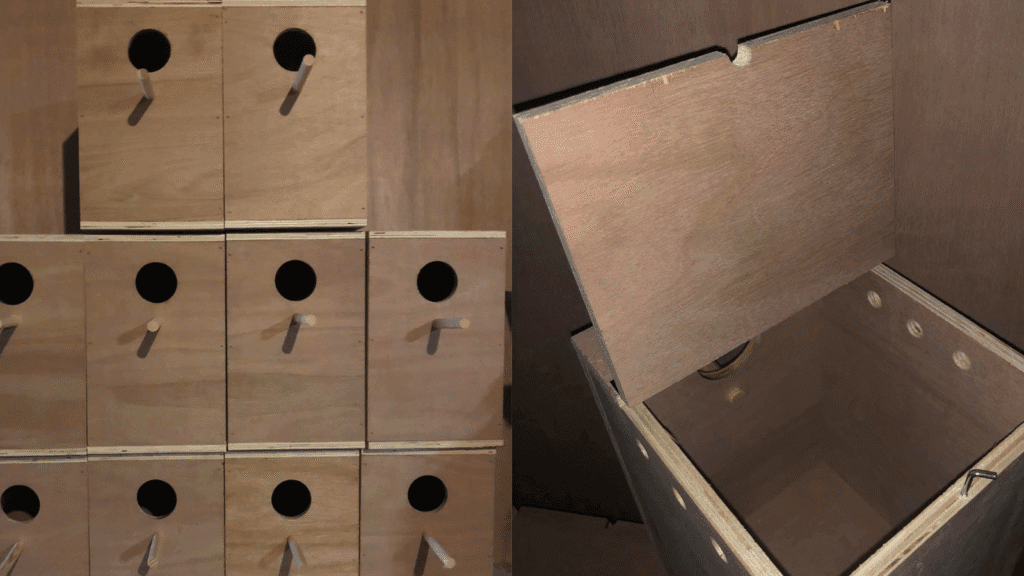
- Shape: Deep vertical or L-shaped nestbox (to mimic termite mound tunnel).
- Size: Base ~20 cm (8 in), depth 40–50 cm (16–20 in).
- Entrance hole: 5–6 cm (2–2.5 in).
- Lining: Wood shavings, peat moss, or soft sawdust.
Breeding Cycle
- Clutch size: 4–6 eggs.
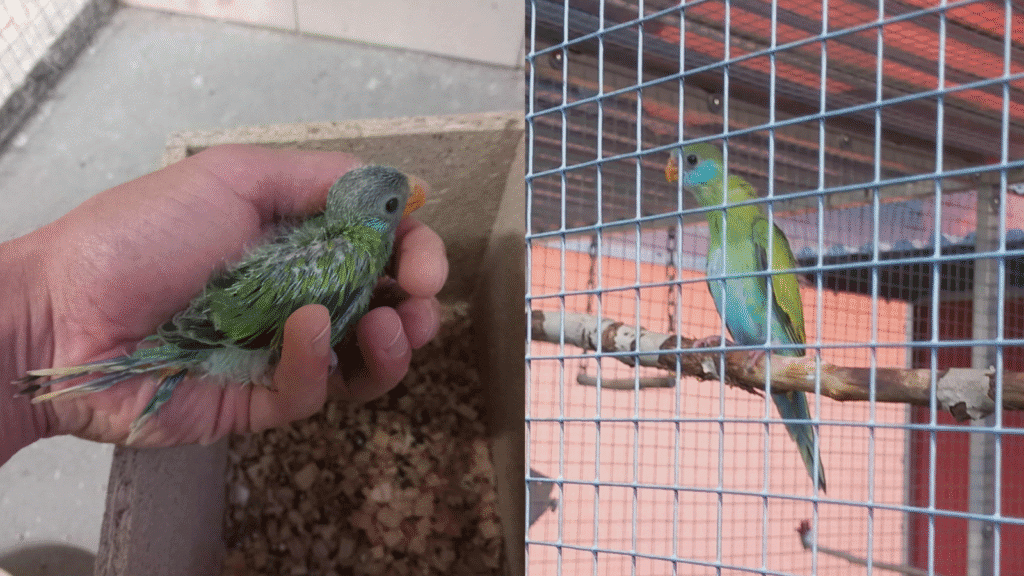
- Incubation: ~20 days, mainly by the female.
- Fledging: 4–5 weeks, with male feeding both hen and chicks.
Key Breeding Notes
- Provide high-protein foods (egg food, insects) for chick development.
- Separate pairs during breeding to avoid male aggression.
- Young males may take 2 years to fully mature and display strong colors.
Health & Common Issues
Like other grass parakeets, Hooded Parrots are hardy but can face issues if neglected:
- Obesity from seed-heavy diets.
- Calcium deficiency, leading to weak shells and poor chick survival.
- Feather plucking if stressed or overcrowded.
- Parasites: Regular worming and aviary hygiene are essential.
Conservation Notes
Unlike the Swift Parrot, which is critically endangered, the Hooded Parrot remains relatively stable in the wild. However, habitat loss, grazing pressures, and fire regimes threaten localized populations. Their termite mound nesting behavior makes them particularly vulnerable to land clearing and altered fire cycles.
In aviculture, Hooded Parrots are popular due to their stunning coloration and manageable size. Responsible breeding programs help maintain strong, genetically diverse captive populations, reducing pressure on wild birds.
Final Thoughts
The Hooded Parrot is not just a beautiful aviary bird but also a species with unique ecological traits. From their dazzling male plumage to their extraordinary termite mound nesting, they are a fascinating subject for both bird keepers and nature enthusiasts.
With the right housing, diet, and breeding management, Hooded Parrots thrive in captivity and reward their keepers with beauty, lively behavior, and the joy of successful breeding.
For conservation-minded aviculturists, supporting habitat protection in Australia and maintaining healthy captive populations are key contributions to the long-term future of this remarkable bird.
FAQ
1. What is the Hooded Parrot?
The Hooded Parrot (Psephotellus dissimilis) is a medium-sized Australian grass parakeet famous for its turquoise-blue males, olive-green females, and unique nesting inside termite mounds.
2. Where do Hooded Parrots live?
They are native to the Northern Territory of Australia, particularly in open savannahs and eucalypt woodlands.
3. What do Hooded Parrots eat?
In the wild, they eat native grass seeds, herbs, and occasional insects. In captivity, a balanced diet includes grass seed mixes, fresh greens, sprouted seeds, fruits, and protein supplements during breeding.
4. How do Hooded Parrots breed in captivity?
Since they naturally nest in termite mounds, aviculturists use deep vertical or L-shaped nestboxes filled with wood shavings. They usually lay 4–6 eggs, with chicks fledging in about 5 weeks.